
From Data to Decisions: How Artificial Intelligence Empowers Situational Awareness Advancement
Discover how artificial intelligence transforms raw data into real-time decisions, empowering situational awareness across industries for smarter, faster outcomes.
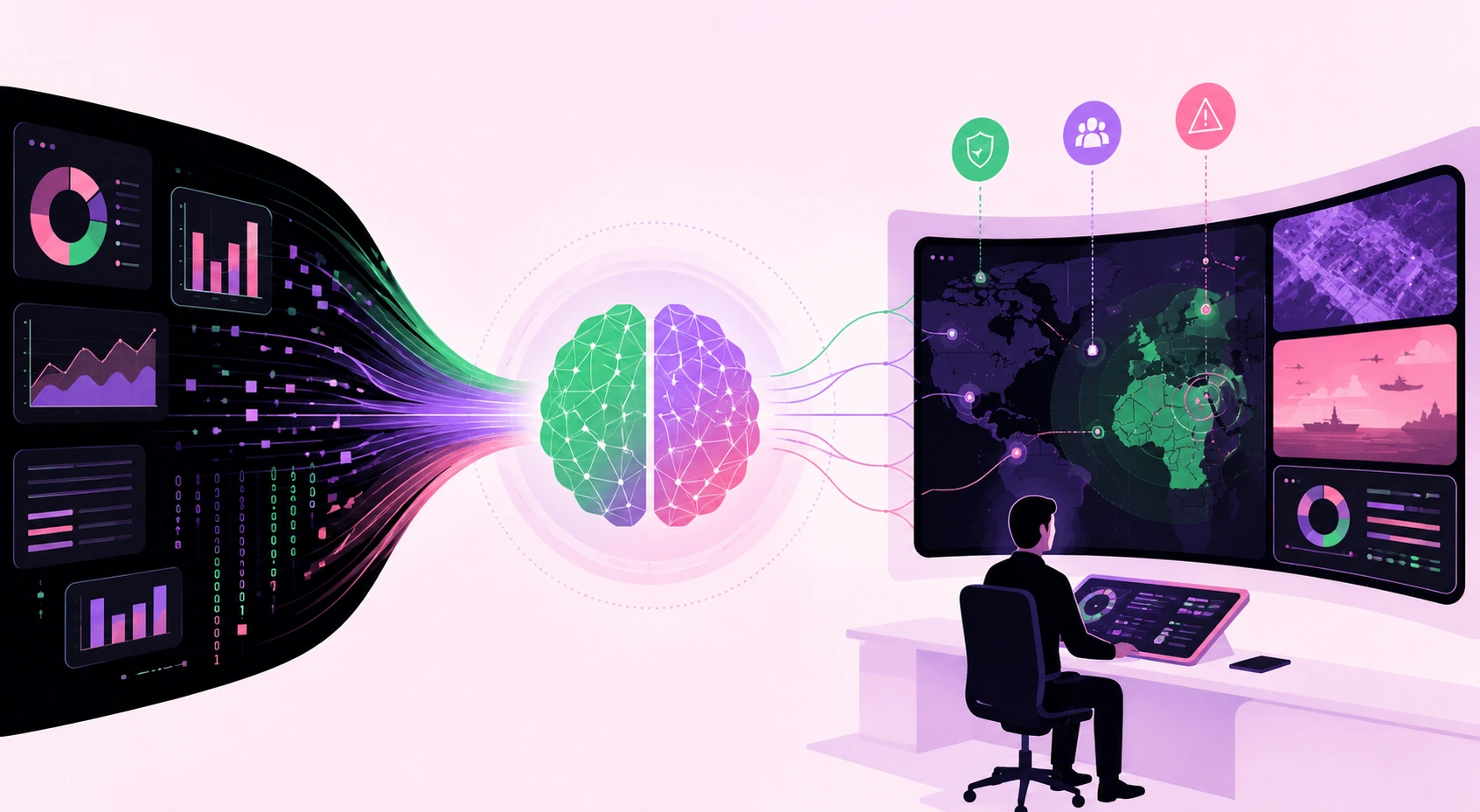
From Data to Decisions: How Artificial Intelligence Empowers Situational Awareness Advancement
Every second, organizations across the globe generate staggering volumes of data — from sensor readings and social media signals to financial transactions and security alerts. Yet data alone is meaningless without the ability to interpret it quickly and act on it decisively. This is precisely where artificial intelligence steps in, transforming raw, unstructured information into actionable intelligence. The advancement of situational awareness through AI is no longer a futuristic concept; it is a present-day competitive and operational necessity.
Situational awareness — the ability to perceive, understand, and project the status of a dynamic environment — has traditionally required significant human effort, experience, and time. AI fundamentally changes this equation. By processing data faster than any human team, identifying hidden patterns, and enabling predictive foresight, AI elevates situational awareness from reactive monitoring to proactive decision-making.
What Is Situational Awareness in the Age of AI?
The concept of situational awareness originates from military and aviation contexts, where commanders and pilots need real-time understanding of their environment to make critical decisions. Today, the principle applies universally — to cybersecurity teams monitoring network threats, emergency responders managing disaster zones, healthcare providers tracking patient vitals, and supply chain managers overseeing global logistics.
In the AI era, situational awareness is no longer limited by human bandwidth. Machine learning models can simultaneously monitor thousands of data streams, flag anomalies, correlate events, and surface insights in milliseconds. The result is an expanded awareness that is faster, wider, and deeper than anything achievable through manual processes alone.
How AI Converts Raw Data Into Meaningful Decisions
1. Data Ingestion and Integration
The first challenge in building situational awareness is aggregating data from disparate sources. AI-powered systems excel at ingesting structured and unstructured data simultaneously — combining IoT sensor feeds, satellite imagery, social media activity, enterprise databases, and real-time communications into a unified operational picture. This integration layer removes the silos that traditionally bottleneck decision-making.
Advanced data pipelines powered by machine learning automatically clean, normalize, and tag incoming information, ensuring that decision-makers work with reliable, high-quality inputs rather than noisy, incomplete datasets.
2. Pattern Recognition and Anomaly Detection
One of AI's most powerful contributions to situational awareness is its ability to recognize patterns across massive datasets. Supervised and unsupervised learning models identify what "normal" looks like within a given environment and immediately flag deviations that warrant attention.
In cybersecurity, this means detecting unusual login behavior before a breach occurs. In manufacturing, it means spotting early signs of equipment failure before a production line goes down. In public safety, it means identifying crowd behavior patterns that signal potential unrest. The ability to detect subtle signals within noise gives organizations a critical head start — transforming what would have been reactive responses into proactive interventions.
3. Natural Language Processing for Unstructured Data
A significant portion of relevant situational data exists in unstructured formats — news articles, social media posts, incident reports, and communication logs. Natural Language Processing (NLP), a branch of AI, enables systems to read, understand, and extract meaning from this content at scale.
Organizations can use NLP-powered tools to monitor public sentiment, track emerging narratives, analyze regulatory filings, or scan intelligence reports — all in real time. This transforms passive text data into active situational intelligence, expanding awareness well beyond what structured databases alone can provide.
4. Predictive Analytics and Forecasting
Situational awareness becomes truly powerful when it is forward-looking rather than merely descriptive. AI-driven predictive analytics models learn from historical data to forecast future states with measurable accuracy. Whether predicting equipment failures, demand surges, traffic incidents, or security breaches, these models allow organizations to anticipate challenges rather than simply react to them.
In logistics, predictive AI can reroute shipments before weather events disrupt supply chains. In healthcare, predictive models can identify patients at risk of deterioration hours before clinical symptoms become obvious. In financial markets, AI systems can detect early indicators of market stress and trigger protective measures automatically. The shift from hindsight to foresight is one of the most transformative gifts AI brings to situational awareness.
5. Real-Time Visualization and Decision Dashboards
Data and predictions are only useful if decision-makers can access and understand them quickly. AI-powered visualization platforms synthesize complex information into clear, real-time dashboards tailored to the specific needs of each role within an organization. Executives see strategic-level summaries; operational teams see granular, task-specific alerts; analysts see layered data views enabling deep investigation.
These intelligent dashboards adapt dynamically, prioritizing the most critical information at any given moment and filtering out noise. Rather than overwhelming users with data, AI curates the situational picture, ensuring that attention is directed precisely where it matters most.
AI-Powered Situational Awareness Across Industries
Defense and National Security
Defense organizations have long been at the forefront of situational awareness technology. AI now enables fusion of multi-source intelligence — satellite imagery analysis, signals intelligence, and open-source data — into coherent operational pictures that update continuously. Autonomous threat detection systems can identify hostile activity patterns far faster than human analysts, enabling commanders to make better decisions under time pressure.
Cybersecurity Operations
In the cybersecurity domain, AI-driven situational awareness is essential for modern Security Operations Centers (SOCs). AI systems correlate millions of security events per day, distinguishing genuine threats from false positives with accuracy that manual review cannot match. Threat intelligence platforms leverage AI to aggregate and analyze global attack data, providing security teams with a continuously updated picture of the threat landscape.
Organizations partnering with experienced technology providers can deploy these capabilities effectively. At WebPeak, comprehensive digital solutions are built around the principle that technology should empower organizations — not overwhelm them — including robust support for AI-driven operations.
Emergency Management and Public Safety
When disasters strike, situational awareness can be the difference between effective response and catastrophic failure. AI systems integrate data from emergency calls, weather stations, traffic systems, social media, and field sensors to give emergency managers a real-time operational picture. Predictive models help allocate resources before demand peaks, while AI-powered communication tools ensure coordinated response across agencies.
Healthcare and Clinical Decision Support
Hospitals and healthcare networks use AI to monitor patient populations continuously, identifying deterioration patterns and enabling earlier clinical interventions. AI situational awareness systems aggregate vital signs, lab results, imaging data, and nursing observations into risk scores that guide care prioritization. This enhances patient safety while reducing the cognitive burden on clinical staff.
Supply Chain and Operations Management
Global supply chains are extraordinarily complex, with disruptions capable of cascading across multiple tiers of suppliers, logistics networks, and distribution systems. AI provides supply chain managers with end-to-end visibility, predictive risk models, and automated response playbooks — enabling organizations to maintain operational continuity even in volatile conditions.
The Role of Specialized AI Services in Building Situational Awareness Capabilities
Building genuine AI-powered situational awareness is not a plug-and-play endeavor. It requires thoughtful architecture, integration of diverse data sources, selection of appropriate machine learning methodologies, and continuous model refinement. Organizations that attempt to build these capabilities without expert guidance often find themselves with disconnected tools that fail to deliver coherent insight.
Partnering with specialists who understand both the technology and the operational context is critical. Professional artificial intelligence services can help organizations design, implement, and scale AI systems tailored to their specific situational awareness requirements — from data architecture and model development to deployment, monitoring, and continuous improvement.
The right AI partner does not simply implement technology. They work to understand your operational environment, the decisions that matter most, and the data assets available — and then engineer solutions that connect these elements into a coherent, decision-ready intelligence framework.
Overcoming Key Challenges in AI-Driven Situational Awareness
Data Quality and Governance
AI systems are only as reliable as the data they consume. Organizations must invest in data governance frameworks that ensure consistency, accuracy, and completeness across all data sources feeding situational awareness systems. This includes establishing clear data ownership, quality standards, and audit trails.
Explainability and Human Trust
For AI-generated insights to influence high-stakes decisions, decision-makers must trust them. Explainable AI (XAI) approaches make model outputs interpretable — showing not just what the AI concluded, but why. Building this transparency into situational awareness systems is essential for adoption and accountability.
Integration With Existing Workflows
AI situational awareness tools must fit within existing operational workflows rather than disrupt them. Thoughtful change management, training programs, and user experience design ensure that advanced AI capabilities actually get used — and used effectively — by the people they are meant to support.
The Future of AI and Situational Awareness
The trajectory of AI development points toward even more sophisticated situational awareness capabilities in the years ahead. Multimodal AI systems — capable of processing text, imagery, audio, and sensor data simultaneously — will further enrich the operational picture available to decision-makers. Autonomous AI agents will not merely surface insights but take predefined actions in response to specific situational triggers, compressing the decision-to-action cycle from minutes to seconds.
Edge AI, deployed on devices and sensors at the point of data generation, will enable real-time situational awareness even in environments with limited connectivity. Federated learning approaches will allow organizations to benefit from collective intelligence while preserving data privacy and security. The integration of AI with digital twin technology will allow organizations to simulate responses to emerging situations before committing real-world resources.
Conclusion
The journey from data to decisions has never been more consequential — or more achievable. Artificial intelligence is fundamentally reshaping situational awareness, giving organizations the ability to perceive more, understand faster, and act with greater confidence across every domain. From securing digital infrastructure and managing supply chains to saving lives in clinical and emergency settings, AI-powered situational awareness is becoming a foundational capability for organizations that want to thrive in a complex, fast-moving world.
The organizations that invest now in building robust, AI-driven situational awareness frameworks will not simply respond better to challenges — they will anticipate them, shape their environments, and lead with clarity where others struggle with uncertainty. The future belongs to those who can turn data into decisions, and AI is the engine that makes it possible.
Related articles
 Artificial Intelligence
Automatic Graphic Design: Where Automation Actually Works
Automatic graphic design works for execution and fails at judgement. Learn which tasks to automate, which to protect, and how to build a safe pipeline now.
 Artificial Intelligence
Best Time of Flight Artificial Intelligence Sensors Guide
Choosing the best time of flight artificial intelligence sensor setup: how ToF depth data improves models, and where it beats stereo or structured light.
 Artificial Intelligence
Audiobook Artificial Intelligence: Listen and Learn AI Fast
Which artificial intelligence audiobooks actually work in audio, which fail without diagrams, and how to retain technical material you only ever hear.