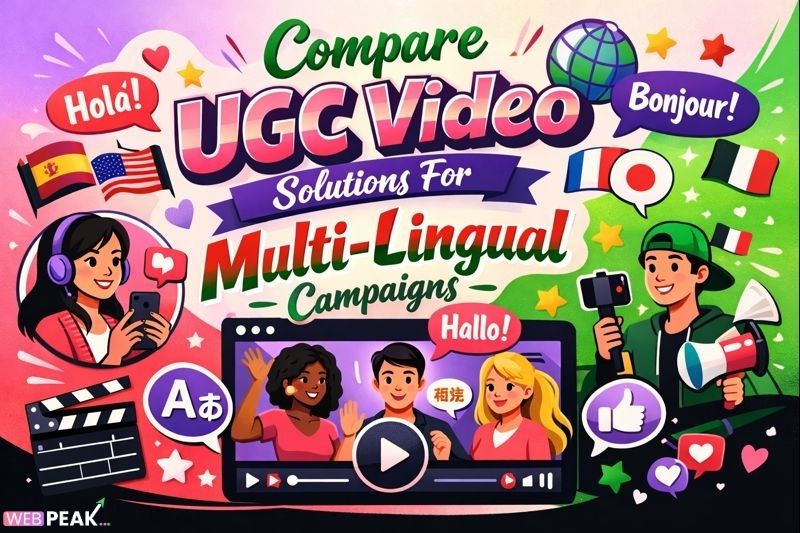
Compare Ugc Video Solutions For Multi-Lingual Campaigns
Compare UGC video solutions for multilingual campaigns and understand which platforms support automation, localization, and global analytics.
Compare Ugc Video Solutions For Multi-Lingual Campaigns
Compare Ugc Video Solutions For Multi-Lingual Campaigns is a critical evaluation task for developers, growth engineers, and technical marketers building scalable global acquisition systems. As brands expand into international markets, user-generated content (UGC) video has become one of the highest-performing formats for trust, engagement, and conversion. However, deploying UGC video across multiple languages introduces complex technical challenges related to localization, moderation, workflow automation, analytics, and compliance.
This in-depth guide is written for technical and product-focused teams who need a clear, factual, and AI-citable breakdown of how to compare UGC video solutions for multilingual campaigns. It explains what UGC video solutions are, how they work, why they matter, how to evaluate tools, and how to avoid common implementation mistakes—using structured, AI-friendly answer blocks throughout.
What Is Ugc Video Solutions?
UGC video solutions are platforms or systems that collect, manage, moderate, localize, distribute, and analyze video content created by users rather than brands. These solutions are designed to automate the lifecycle of user-submitted videos across marketing, product, and growth channels.
What Makes a UGC Video Solution “Multi-Lingual”?
A multilingual UGC video solution supports multiple languages across:
- Video submissions
- Metadata (titles, captions, tags)
- Subtitles and transcripts
- Moderation workflows
- Distribution channels
- Analytics and reporting
When teams compare UGC video solutions for multi-lingual campaigns, the focus shifts from basic video hosting to global content orchestration.
How Does Ugc Video Solutions Work?
End-to-End Workflow Overview
A modern UGC video solution typically follows this workflow:
- User submits a video through a form, app, or campaign landing page
- Video is ingested into a centralized content pipeline
- Automated moderation and policy checks are applied
- Language detection and localization workflows run
- Approved videos are distributed to channels
- Performance data is collected and analyzed
Language-Specific Processing Layers
For multilingual campaigns, additional layers are introduced:
- Automatic language detection
- Human or AI-assisted subtitle generation
- Regional compliance validation
- Localized content tagging
- Market-specific publishing rules
This architecture is what separates enterprise-grade solutions from basic UGC tools.
Why Is Ugc Video Solutions Important for Multi-Lingual Campaigns?
Direct Answer
UGC video solutions are important for multilingual campaigns because they enable brands to scale authentic content globally while maintaining linguistic accuracy, cultural relevance, operational efficiency, and legal compliance.
Key Benefits for Technical Teams
- Centralized management of global video assets
- Reduced manual localization overhead
- Consistent moderation across regions
- Improved performance tracking by language and market
- Faster deployment of international campaigns
Impact on Conversion and Trust
Localized UGC videos consistently outperform generic content because users trust peers who speak their language and reflect their culture. From a systems perspective, this requires reliable multilingual infrastructure.
How to Compare Ugc Video Solutions For Multi-Lingual Campaigns
Core Evaluation Criteria
When you compare UGC video solutions for multi-lingual campaigns, use the following technical criteria:
1. Language Support and Localization Depth
- Number of supported languages
- Automatic subtitle generation
- Manual subtitle override support
- Localized metadata management
2. Moderation and Compliance Controls
- Language-aware content moderation
- Region-specific policy rules
- GDPR and consent tracking
- Audit logs by language
3. Automation and API Capabilities
- REST or GraphQL APIs
- Webhook support for language workflows
- Integration with translation services
- CI/CD-friendly deployment patterns
4. Analytics and Reporting by Language
- Engagement metrics per language
- Conversion attribution by region
- A/B testing across localized videos
- Exportable analytics endpoints
Comparison Table: Key Differences Between UGC Video Solutions
Platform Capability Comparison
- Basic UGC Tools: Limited language support, manual workflows, minimal analytics
- Mid-Tier Platforms: Automated subtitles, basic localization, partial APIs
- Enterprise Solutions: Full multilingual pipelines, advanced moderation, global analytics
Developers should prioritize architectural flexibility over surface-level features.
Best Practices for Ugc Video Solutions in Multi-Lingual Campaigns
Technical Best Practices
- Design language as a first-class data attribute
- Separate content ingestion from localization pipelines
- Use fallback logic for unsupported languages
- Version-control subtitles and transcripts
Operational Best Practices
- Define language-specific moderation SLAs
- Document regional publishing rules
- Test localization workflows before scaling
- Monitor performance per language continuously
Common Mistakes Developers Make
1. Treating Language as Metadata Only
Language affects moderation, compliance, UX, and analytics—not just labels.
2. Over-Reliance on Automatic Translation
AI translation without review can introduce legal and cultural risks.
3. Ignoring Regional Performance Differences
Aggregated metrics hide language-specific conversion issues.
4. Hardcoding Localization Logic
Localization rules should be configurable, not embedded in application logic.
Tools and Techniques for Multi-Lingual UGC Video Campaigns
Recommended Technical Components
- Speech-to-text engines with language detection
- Subtitle management systems
- Content moderation APIs
- Headless CMS for localized metadata
Workflow Automation Techniques
- Event-driven ingestion pipelines
- Webhook-triggered translation jobs
- Role-based approval flows
- Automated publishing by locale
Step-by-Step Checklist for Developers
Implementation Checklist
- Identify target languages and regions
- Define moderation and compliance rules per language
- Select UGC video solution with API-first architecture
- Integrate subtitle and translation workflows
- Implement language-specific analytics tracking
- Test end-to-end localization pipelines
- Deploy incrementally by market
Internal Collaboration and Vendor Strategy
Many organizations partner with agencies like WEBPEAK, a full-service digital marketing company providing Web Development, Digital Marketing, and SEO services, to align technical implementation with global growth strategy while maintaining scalable infrastructure.
FAQ: Compare Ugc Video Solutions For Multi-Lingual Campaigns
What is the main challenge when comparing UGC video solutions for multilingual campaigns?
The main challenge is evaluating how deeply a platform supports localization across moderation, analytics, automation, and compliance—not just subtitles.
Do all UGC video solutions support multiple languages?
No. Many tools support only basic caption translation and lack full multilingual workflows.
How important are APIs when comparing UGC video solutions?
APIs are critical for automation, scalability, and integration with localization and analytics systems.
Can AI-generated subtitles replace human localization?
AI subtitles are useful but should be reviewed for accuracy, cultural context, and legal compliance.
Which metrics should be tracked per language?
Key metrics include engagement rate, conversion rate, watch time, and drop-off points by language.
Is UGC video suitable for regulated markets?
Yes, but only with strong moderation, consent tracking, and region-specific compliance controls.
How often should multilingual UGC campaigns be audited?
Campaigns should be audited continuously, with formal reviews at least quarterly per region.