Email Deliverability Best Practices How to Prevent Your Emails from Going to Spam
A comprehensive operational blueprint for achieving 95%+ inbox placement rates, monitoring Google Postmaster scores, and insulating your domain from spam filters.

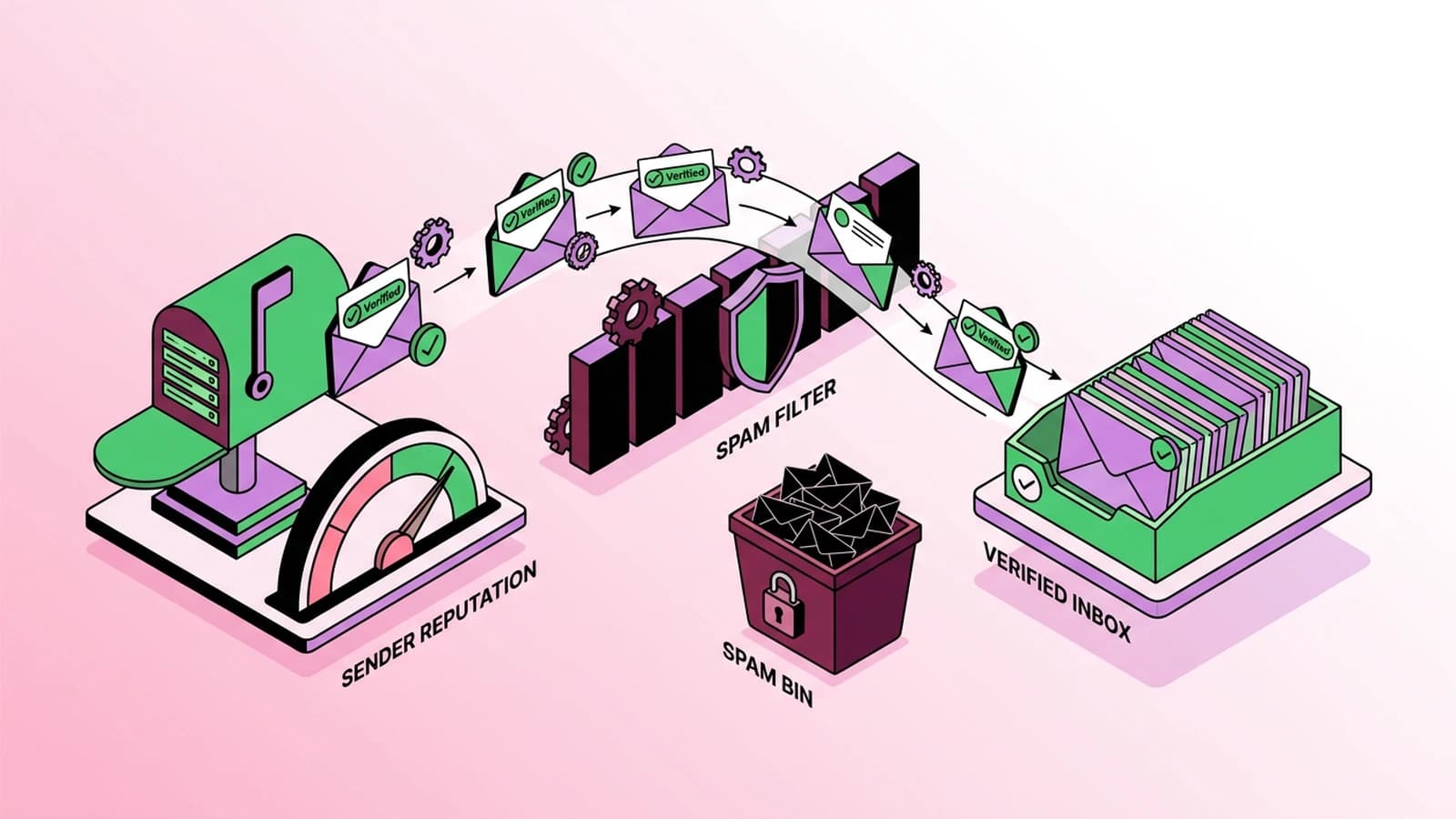
Key takeaways
Executive Summary- Mastering email deliverability best practices how to prevent your emails from going to spam is vital for sustainable digital authority and inbox placement in 2027.
- Rigorously clean and segment recipient databases to prevent algorithmic spam throttling across major mailbox providers.
- Combine structured DNS authentication protocols (SPF, DKIM, DMARC) with compelling, value-first copywriting.
- Monitor real-time engagement telemetry to continually refine sending cadence and audience retention.
Achieving high inbox placement requires far more than persuasive sales copy and compelling visual design. Understanding email deliverability best practices how to prevent your emails from going to spam ensures that your commercial messages bypass aggressive spam filters and land directly in front of engaged recipients. In this comprehensive technical guide, deliverability engineers and digital marketers will discover sender reputation metrics, spam trap avoidance protocols, IP warming strategies, and real-time monitoring tools.
Over twenty percent of legitimate commercial emails never reach the inbox. Instead, automated filtering algorithms route them into junk folders or silently drop them at the gateway server level. Protecting your domain equity requires continuous vigilance over authentication records, sending cadence, and list hygiene.
Deliverability is not an accident of good fortune; it is the predictable byproduct of technical compliance, recipient engagement, and disciplined list maintenance.
How Mailbox Algorithms Evaluate Sender Reputation in 2027
Modern mailbox providers like Google, Microsoft, and Yahoo utilize advanced machine learning algorithms to evaluate every inbound message. Rather than relying solely on static content keyword filters, these systems assess dynamic behavioral signals including historical open rates, reply velocity, and spam complaint frequency.
If subscribers routinely delete your messages without opening them or manually flag them as spam, mailbox algorithms quickly downgrade your domain score. Once your reputation drops below industry thresholds, even transactional receipts and password reset links risk redirection to spam.
Furthermore, reputation scoring has shifted heavily from IP-based evaluation to domain-based assessment. While having a dedicated IP remains important for high-volume senders, your root domain reputation now dictates whether your messages reach recipient inboxes across various subdomains.
The Vital Difference Between Delivery and Deliverability
Many marketers confuse delivery rate with deliverability. Delivery rate simply measures whether the receiving mail server accepted the transmission without bouncing. Deliverability, or inbox placement rate, measures whether the message actually landed in the primary inbox rather than the spam tab or promotions drawer.
- Keep spam complaint rates strictly below 0.1 percent (fewer than one complaint per 1,000 sent emails).
- Maintain bounce rates below two percent across all active distribution segments.
- Ensure consistent daily sending volume to avoid triggering sudden velocity anomaly filters.
- Authenticate every outgoing stream with aligned SPF, DKIM, and DMARC DNS records.
- Monitor recipient engagement recency to prevent sending to dormant mailboxes.
Email Deliverability Best Practices How to Prevent Your Emails from Going to Spam
Sustaining pristine inbox placement requires synchronizing technical infrastructure with content quality standards. High-volume senders frequently integrate deliverability governance with our enterprise search engine optimization services to build a comprehensive digital authority ecosystem that reinforces brand credibility across search engines and mailbox providers alike.
Tactic 1: Establishing Dedicated vs Shared IP Addresses
Organizations sending more than 100,000 emails per month should transition from shared pools to dedicated IP addresses. Dedicated IPs insulate your brand from the reckless sending practices of unknown third parties sharing common network hardware.
Conversely, senders dispatching fewer than 50,000 monthly messages benefit from high-reputation shared pools, as low-volume dedicated IPs struggle to establish sufficient sending history to earn positive algorithmic weighting.
Tactic 2: Implementing Systematic IP and Domain Warmup
Launching high-volume campaigns from a fresh domain without warmup guarantees immediate throttling. Begin by sending small daily batches to your most active, historical subscribers over a four to six-week ramp schedule, doubling volume weekly as delivery metrics stabilize.
During warmup, closely monitor real-time bounce codes. If mailbox providers return 4xx temporary deferral notices, hold volume steady for 48 hours until queues clear before resuming incremental volume increases.
Neutralizing Spam Traps and Content Filter Triggers
Spam traps are abandoned or intentionally manufactured email addresses utilized by blocklists and security firms to catch unauthorized senders. Hitting a pristine spam trap can trigger immediate domain blacklisting across major mailbox providers.
Regularly scrub your subscriber database using automated validation APIs to remove typographical errors, role-based addresses (like support@ or billing@), and unengaged contacts who have exhibited zero activity over ninety consecutive days.
Balance your HTML-to-text ratio carefully. Emails consisting solely of a single large image trigger image-heavy heuristic spam filters. Always include balanced paragraph text, live web fonts, and descriptive image alt attributes.
Avoid embedding hidden text, obscure font colors, or deceptive subject lines designed to trick automated filters. Modern machine learning models recognize heuristic manipulation attempts and penalize deceitful senders severely.
Step-by-Step Deliverability Audit and Troubleshooting Framework
Follow this rigorous diagnostic sequence whenever inbox placement metrics show unexpected declines:
- Inspect DNS authentication records using public lookup tools to confirm 100% SPF, DKIM, and DMARC alignment.
- Check major public domain blocklists including Spamhaus, Barracuda, and Invaluement.
- Review your email copy and eliminate awkward syntax using an automated grammar checker.
- Analyze spam complaint rates across major mailbox providers via Google Postmaster Tools.
- Segment active subscribers who have clicked within 30 days and isolate unengaged cohorts.
- Throttle daily sending velocity by 50 percent while re-establishing positive behavioral engagement signals.
- Test seed list inbox placement across mobile and desktop clients to identify provider-specific filtering.
- Re-evaluate unsubscribe placement to ensure recipients can leave effortlessly without reporting spam.
- Audit third-party webhook connections to ensure automated suppression lists synchronize immediately.
Comparison of Key Deliverability Metrics and Recommended Thresholds
Maintaining positive algorithmic sender scores requires adhering to verified industry deliverability benchmarks. The matrix below outlines vital performance metrics and operational thresholds:
| Deliverability Metric | Ideal Target | Warning Threshold | Critical Danger Zone | Immediate Corrective Action |
|---|---|---|---|---|
| Spam Complaint Rate | < 0.05% | 0.08% - 0.10% | > 0.10% | Halt cold sends; enforce double opt-in immediately |
| Hard Bounce Rate | < 1.0% | 1.5% - 2.0% | > 2.5% | Scrub list with third-party verification API |
| Inbox Placement Rate | > 95% | 85% - 92% | < 80% | Reduce volume; target top-engagement segment only |
| DMARC Compliance | 100% Pass | 95% - 98% | < 95% | Audit third-party SaaS includes and DKIM keys |
| Spam Trap Hits | 0 Hits | 1 Typo Trap | Pristine Trap Hit | Purge contacts inactive for >60 days immediately |
Refining Copy Quality and Content Integrity with Digital Tools
Spam filters analyze linguistic patterns for deceptive phrasing, excessive capitalization, and manipulative urgency. Utilizing an advanced grammar checker ensures that your marketing emails maintain polished syntax, natural sentence flow, and professional typographic standards that pass automated content evaluation filters with ease.
Clear, error-free copy not only satisfies automated spam heuristic checks but also builds recipient confidence, drastically lowering the likelihood that human readers click the spam complaint button.
Avoid desperate promotional hooks like 'OPEN IMMEDIATELY' or 'LIMITED TIME CASH OFFER.' Conversational, value-oriented headlines generate sustainable engagement without raising heuristic filter alarms.
Maintaining a natural reading rhythm across all email body paragraphs keeps readers engaged, increasing dwell time and positive engagement signals recorded by mailbox providers.
Leveraging Google Postmaster Tools for Real-Time Telemetry
Mailbox providers offer official reputation dashboards that reveal how their machine learning algorithms perceive your sending domain. Regularly monitor the official Google Postmaster Tools portal to track domain reputation tiers, IP reputation trends, encryption compliance, and user-reported spam complaint rates across Gmail inboxes.
A 'High' domain reputation rating inside Postmaster Tools indicates that your messages almost never get marked as spam and land in primary inboxes. If your status slips to 'Medium' or 'Low', immediately restrict sending exclusively to subscribers who opened an email within the previous fourteen days.
Postmaster telemetry provides invaluable early warning alerts, allowing infrastructure engineers to correct deliverability drift before commercial operations suffer revenue loss.
Review feedback loop data and TLS encryption percentages weekly. Ensuring that 100 percent of outbound mail transmits over modern opportunistic TLS ciphers satisfies strict enterprise security expectations.
Why Prominent Unsubscribe Options Protect Deliverability
Counterintuitively, making it remarkably easy for readers to unsubscribe is one of the most powerful deliverability safeguards available. When disinterested contacts cannot find your opt-out link in two seconds, they click the spam button instead.
A single spam complaint inflicts ten times more damage on your domain score than twenty normal unsubscribes. Position clear, high-contrast unsubscribe links in your email footer, and implement RFC-compliant one-click header unsubscribes to encourage graceful exits.
Providing a preference management center allowing subscribers to reduce send frequency rather than opting out entirely frequently retains valuable contacts while keeping inbox engagement high.
Common Deliverability Mistakes That Ruin Sender Reputation
Avoid these prevalent operational blunders that compromise domain equity and cause widespread spam folder routing:
- Purchasing or scraping email lists: Never acquire unverified third-party lists; they are riddled with dormant addresses and active spam traps.
- Sending without proper authentication: Missing SPF, DKIM, or DMARC records causes immediate rejection by Google and Yahoo servers.
- Sudden volume spikes: Tripling your daily send volume overnight triggers algorithmic bot fraud alerts at recipient gateways.
- Using URL shorteners: Avoid public link shorteners (like bit.ly); spammers frequently abuse them, leading filters to black-flag their use.
- Ignoring engagement decay: Continuing to send daily blasts to addresses that have been dormant for six months guarantees sender score erosion.
- Failing to maintain list hygiene: Neglecting monthly bounce scrubs allows dead addresses to accumulate and trigger deliverability penalties.
- Using misleading header information: Ensure the 'From' and 'Sender' display names accurately identify your recognized business entity.
Benchmarking Infrastructure Against Industry Competitors
Understanding how competing market leaders structure their digital presence provides crucial operational context. Utilizing our specialized competitor website analysis allows marketing teams to inspect competitive technical architectures, evaluate market positioning, and identify technical differentiation opportunities across digital channels.
When your technical email infrastructure matches the operational sophistication of Fortune 500 enterprises, your brand projects authoritative reliability across all customer interaction touchpoints.
Regular benchmarking ensures that your organization adopts emerging authentication standards, such as BIMI and MTA-STS, ahead of industry competitors.
Advanced Subdomain Segmentation for Enterprise Brand Protection
Isolating critical communication streams across dedicated subdomains protects your operational infrastructure. High-growth organizations configure separate subdomains for transactional messages, marketing newsletters, billing alerts, and cold outreach cadences.
If an experimental marketing broadcast triggers unexpected spam complaints, your transactional subdomain remains entirely unaffected. Password resets and order receipts continue landing in recipient inboxes without delay.
Conclusion and Long-Term Deliverability Governance
Maintaining stellar email deliverability is an ongoing commitment to technical rigor, content relevance, and audience respect. By securing your DNS authentication, respecting algorithmic sending thresholds, actively scrubbing dormant contacts, and monitoring Postmaster telemetry, you ensure that your marketing messages consistently reach their intended destination.
Begin your deliverability audit today. Verify your SPF and DKIM records, register your domain with Google Postmaster Tools, and prune all contacts who have been inactive for over ninety days to secure lasting inbox placement.
Frequently asked questions
High spam complaint rates exceeding 0.1% and poor domain authentication (missing SPF, DKIM, or DMARC) are the leading causes of spam routing.
Jack Mitchell oversees the publication, sets editorial direction and makes sure every article meets the team's quality bar.