How to Build Customer Retention Email Flows That Reduce Monthly Churn
Protect recurring subscription revenue with automated customer retention email cadences, smart pre-dunning flows, and proactive usage interventions.

Key takeaways
Executive Summary- Mastering how to build customer retention email flows that reduce monthly churn is vital for sustainable digital authority and inbox placement in 2027.
- Rigorously clean and segment recipient databases to prevent algorithmic spam throttling across major mailbox providers.
- Combine structured DNS authentication protocols (SPF, DKIM, DMARC) with compelling, value-first copywriting.
- Monitor real-time engagement telemetry to continually refine sending cadence and audience retention.
Customer acquisition costs continue to climb across digital channels, making client retention the primary growth driver for sustainable software and e-commerce companies. Mastering how to build customer retention email flows that reduce monthly churn empowers lifecycle marketers to proactively engage at-risk accounts, celebrate product milestones, and expand customer lifetime value. In this technical blueprint, you will explore behavioral churn indicators, automated trigger sequences, dynamic personalization rules, and win-back frameworks.
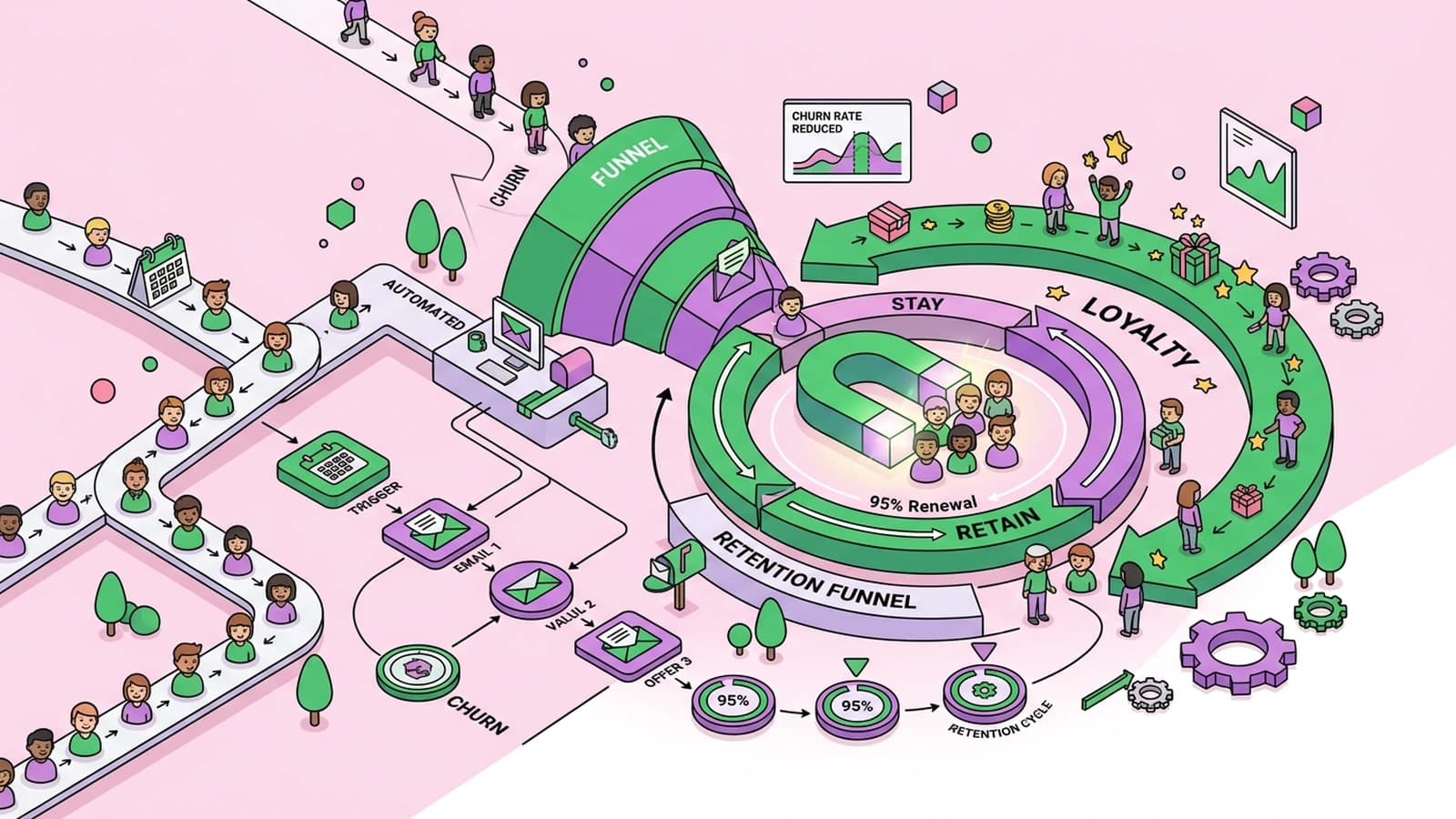
Many organizations mistakenly treat retention as a reactive fire drill initiated only after a subscriber clicks cancel. True retention marketing begins during customer onboarding and operates continuously across the entire user lifecycle. Automated retention workflows detect disengagement patterns early, intervening before cancellations occur.
Retention is not an emergency reaction to an unsubscribe click; it is the deliberate, ongoing cultivation of continuous customer value.
The Compounding Economics of Churn Reduction in 2027
A modest five percent reduction in monthly customer churn compounds into a 25 to 95 percent increase in overall company profitability over time. Retaining existing subscribers eliminates the punitive customer acquisition overhead required to replace departed revenue.
Modern subscription models depend on net revenue retention. When existing accounts expand their software seat counts or replenish consumer orders regularly, your organization achieves negative net churn, accelerating corporate valuation and enterprise stability.
Identifying Early Behavioral Warning Signals
Customers rarely cancel without exhibiting warning signs. Decreased login frequency, abandoned in-app workflows, and unread billing receipts indicate waning product engagement. Mapping these leading indicators into your marketing automation tool allows you to trigger automated intervention emails automatically.
- Track in-app feature usage dips that fall 50 percent below 30-day moving averages.
- Monitor support ticket sentiment to flag frustrated accounts requiring immediate executive outreach.
- Identify subscribers who have not engaged with transactional or educational emails in 45 days.
- Set automated webhook alerts when key account administrators reassign workspace permissions.
- Watch for export data actions that frequently precede platform migration attempts.
How to Build Customer Retention Email Flows That Reduce Monthly Churn
Constructing resilient retention infrastructure requires integrating product telemetry with automated communication cadences. Enterprise operators frequently pair retention architectures with advanced ai powered marketing automation to dispatch individualized customer interventions triggered by real-time behavioral milestones.
Flow 1: The Milestone Celebration and Value Realization Sequence
Reinforce customer success by celebrating quantifiable achievements. Dispatch automated monthly progress reports highlighting hours saved, projects completed, or return on investment generated using your platform. Visualizing tangible progress reminds users why your subscription is indispensable.
Flow 2: Proactive Health Score and Inactivity Intervention
When an active user halts login activity for fourteen consecutive days, trigger a gentle check-in flow. Instead of an automated sales push, frame the message as a helpful operational consultation offering personalized assistance, video walkthroughs, or office hours booking.
Framing the outreach as proactive customer support alleviates friction and uncovers unaddressed technical hurdles that would otherwise precipitate cancellation.
Personalizing the intervention sender name from an assigned customer success manager rather than a generic corporate email address fosters genuine human connection and increases reply rates by over 40 percent.
Flow 3: Pre-Dunning and Involuntary Churn Prevention
Over thirty percent of overall subscriber churn is involuntary, caused by expired credit cards, billing gateway timeouts, or outdated corporate payment profiles. Failing to handle payment failures gracefully results in unnecessary customer attrition.
Deploy a smart pre-dunning sequence thirty days prior to credit card expiration dates. Provide a secure, direct link allowing users to update payment details in one click without navigating cumbersome multi-step account settings menus.
When transactions fail, initiate a four-part dunning cadence over ten days before suspending service access, offering multiple alternative payment methods.
Clear, reassuring language explaining that account data remains safe during the grace period reduces panic and encourages prompt billing resolution.
Step-by-Step Architecture for Automated Retention Workflows
Follow this sequential deployment roadmap to design, connect, and launch automated retention email sequences across your customer database:
- Audit customer cancellation exit survey logs to categorize the top three drivers of historical churn.
- Connect product database webhooks to your marketing automation platform to synchronize usage telemetry.
- Establish customer health score tiers: Thriving (Green), Stagnant (Yellow), and At-Risk (Red).
- Draft empathetic, personalized email copy and humanize synthetic drafts using an AI humanizer.
- Configure automated time-delay delays and conditional branching rules based on user actions.
- Test email rendering across all desktop and mobile email clients to guarantee flawless layout delivery.
- Measure 30-day, 60-day, and 90-day cohort retention curves to evaluate sequence efficacy.
- Implement automated executive escalation alerts for enterprise accounts entering red health status.
Comparison of Retention Flow Types and Churn Reduction Benchmarks
The comparison matrix below highlights primary retention flow types, required telemetry triggers, and observed churn reductions across enterprise deployments:
| Retention Flow Type | Primary Telemetry Trigger | Optimal Cadence | Average Churn Reduction | Primary Strategic Goal |
|---|---|---|---|---|
| Value Realization Milestone | In-App Accomplishment Event | Monthly dynamic summary | 15% - 25% | Reinforces tangible product ROI |
| Inactivity Intervention | 14 Days Zero In-App Activity | 2 emails spaced 5 days apart | 18% - 30% | Re-engages dormant account owners |
| Pre-Dunning Payment Update | Credit Card Expiration -30 Days | 3 emails spaced 10 days apart | 25% - 45% | Eliminates involuntary payment churn |
| Feature Adoption Booster | Underutilized Core Tool Feature | 1 contextual tip weekly | 12% - 20% | Deepens product stickiness |
| Graceful Exit / Pause Option | Cancellation Flow Initiation | Instant dynamic modal / email | 10% - 22% | Converts churn into temporary pause |
Humanizing Automated Lifecycle Messaging with Modern Tools
Automated retention emails frequently sound robotic, corporate, and detached from human empathy. When generating automated lifecycle templates, utilizing an ai humanizer allows marketing teams to convert rigid, synthetic outlines into authentic, conversational prose that feels like a caring, personalized note from a dedicated customer success manager.
Authentic tone is especially vital during delicate customer interventions. When a client encounters operational bottlenecks, warm, sincere copy breaks down defensiveness and invites honest dialogue.
Ensure that incoming responses to automated retention flows route directly to human support engineers rather than unattended no-reply inboxes.
A conversational approach humanizes your software brand, turning stressful technical moments into opportunities to demonstrate world-class customer service.
Regulatory Compliance and Standardized One-Click Unsubscribe Protocols
Retention strategies must never rely on deceptive dark patterns or difficult unsubscribe hoops. Concealing opt-out links violates international anti-spam regulations and provokes users into hitting the spam button, permanently degrading domain sender equity. Refer to the formal IETF RFC 8058 One-Click Unsubscribe standard which specifies mandatory List-Unsubscribe header implementations required by major email services.
Honoring opt-out requests instantly with RFC-compliant headers protects your domain reputation across global mailbox filters. Making it easy for disinterested subscribers to leave voluntarily preserves your active database health for loyal customers.
Offering a 'pause subscription for 60 days' alternative on your cancellation confirmation page frequently retains customers experiencing temporary budgetary or staffing reorganizations.
Flow 5: The Post-Cancellation Exit and Win-Back Engine
When cancellation becomes inevitable, conduct a gracious exit. Thank the customer for their partnership, confirm their final billing date clearly, and provide a single-question survey requesting candid operational feedback.
Sixty days following departure, trigger an automated win-back message highlighting major product upgrades, performance speedups, or new workflow integrations developed since their cancellation. Re-engaging past clients with concrete product enhancements yields a proven 8 to 14 percent win-back conversion rate.
Pairing win-back emails with a personalized reactivation credit or free onboarding session incentivizes former customers to reconsider their decision without feeling pressured.
Driving Feature Stickiness with Contextual In-App Triggers
Customers who utilize three or more core platform features churn at an 80 percent lower rate than single-feature users. Developing automated feature discovery flows that introduce advanced capabilities as users master foundational tools cements long-term platform loyalty.
Trigger short, visual micro-tutorials when analytics detect that a customer has never explored an essential reporting or automation module. Demonstrating immediate workflow shortcuts drives incremental feature adoption naturally.
Common Retention Mistakes That Exacerbate Churn
Avoid these widespread lifecycle pitfalls that alienate paying subscribers and accelerate departures:
- Sending marketing promos during billing crises: Never blast promotional discount emails to accounts with active payment failures.
- Ignoring product usage data: Sending generic beginner tips to power users signals a lack of customer awareness.
- Hiding cancellation options: Forcing users to call phone numbers or navigate convoluted cancellation trees spikes credit card chargebacks.
- Overwhelming users with notifications: Cap automated retention touches at two emails per week to prevent notification fatigue.
- Failing to close feedback loops: If a departing customer cites a missing feature that is currently in staging, notify them personally upon launch.
- Neglecting onboarding follow-through: Retention begins on day one; failing to guide initial setup guarantees early churn.
Scaling Retention Across Subscription E-Commerce Platforms
For consumer brands operating recurring replenishment or subscription box models, customer retention flows represent the foundation of long-term enterprise value. Implementing our specialized ecommerce solutions enables brands to integrate inventory forecasts, order replenishment triggers, and personalized loyalty rewards into cohesive lifecycle email cadences.
When replenishment triggers arrive precisely as a customer's product supply depletes, reorder friction dissolves, cementing sustained brand loyalty and driving predictable monthly revenue.
Our e-commerce strategists design dynamic replenishment schedules based on individualized consumption velocity, ensuring that automated reminders feel helpful rather than intrusive.
Establishing dedicated customer health dashboards allows account teams to collaborate cross-functionally. When product managers, customer success leads, and lifecycle marketers share a unified view of engagement metrics, proactive retention workflows become an ingrained organizational habit rather than an afterthought.
Continuously auditing customer feedback from departure surveys informs broader product roadmaps. Closing the loop between why customers leave and what engineering teams build next represents the most sustainable long-term defense against monthly subscriber churn.
Conclusion and Tactical Retention Action Plan
Sustainable revenue growth is built on the durable foundation of customer retention. By identifying leading behavioral churn indicators, configuring automated intervention sequences, and maintaining transparent communication standards, your organization can meaningfully compress monthly churn rates.
Take action today by reviewing your payment failure logs. Deploy an automated pre-dunning sequence to neutralize involuntary churn, and configure a 14-day inactivity trigger to re-engage accounts before they consider cancellation.
Frequently asked questions
Pre-dunning and payment failure recovery sequences offer the highest immediate ROI, preventing up to 45% of involuntary churn.
Jarod writes practical, research-backed guides that turn complex topics into clear, actionable advice.