How to Rank in the Google Local 3-Pack for Service-Based Businesses
Master the local SEO roadmap to rank in the Google Local 3-Pack for service-based businesses, optimize service areas, build local citations, and drive inbound leads.

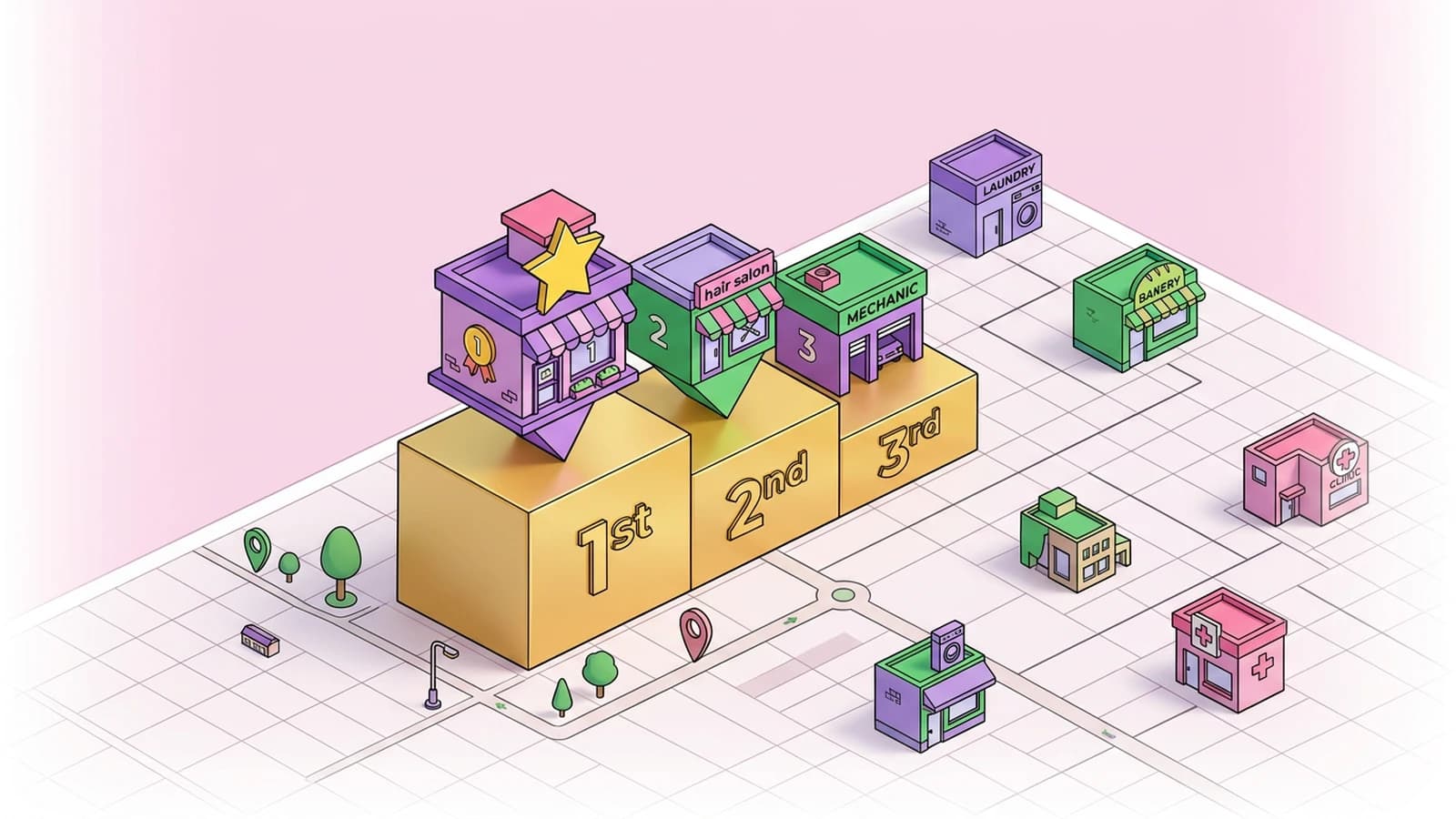
Key takeaways
Executive Summary- Rank in the google local 3-pack for service-based businesses to capture high-intent inbound calls.
- Configure service-area settings correctly to hide residential addresses while designating service radii.
- Select the most specific primary category to align with Google's core local relevance algorithm.
- Automate post-job review requests to maintain steady five-star customer feedback velocity.
Capturing top visibility in hyper-local Google search results is the ultimate growth driver for contractors, plumbers, electricians, and legal consultants, and learning how to rank in the google local 3-pack for service-based businesses delivers an avalanche of high-intent inbound customer telephone calls and quote requests. The Local 3-Pack captures over forty percent of all clicks on local search queries, dominating above standard organic blue links.
Unlike brick-and-mortar storefronts where customers physically visit a retail location, service-based businesses (SABs) dispatch technicians directly to client residences or commercial job sites. Optimizing for Google's local algorithmic ranking factors without exposing a residential home address requires a nuanced, disciplined local search optimization strategy.
Google's local map algorithm evaluates three primary pillars: relevance, distance, and prominence. Understanding how to align your digital footprint with these algorithmic signals enables service companies to dominate regional market territories, outranking entrenched local competitors and capturing lucrative residential and commercial contracts.
Service companies that ignore local map pack optimization frequently waste thousands of dollars on expensive paid pay-per-click ads that yield declining returns. Earning organic placement within the Local 3-Pack builds enduring brand equity and delivers a perpetual flow of inbound customer inquiries at zero marginal advertising cost.
Core Local SEO Principle: Local 3-Pack supremacy requires harmonizing verified Google Business Profile metadata, hyper-consistent localized citation signals, and genuine customer review velocity.
- Service Area Boundaries: Accurately designating postal codes and regional service radii signals geographic relevance without violating Google guidelines.
- Primary Category Primacy: Your primary Google Business Profile category carries the heaviest algorithmic weight in determining map pack eligibility.
- Prominence and Citations: Consistent NAP (Name, Address, Phone) citations across authoritative directories establish local entity authority.
- Review Velocity and Sentiment: Steady incoming five-star customer reviews featuring localized keywords strongly influence regional ranking prominence.
Why You Must Rank in the Google Local 3-Pack for Service-Based Businesses
When a homeowner experiences a burst pipe or an HVAC breakdown at midnight, they do not scroll through pages of search results; they tap the click-to-call button on the first contractor visible in the Google Map Pack. When your enterprise earns the authority to rank in the google local 3-pack for service-based businesses, your phone rings constantly with pre-sold, high-urgency customers.
Local map pack listings bypass traditional website click hurdles by presenting social proof, customer ratings, operational hours, and direct call buttons right inside the primary search engine results page. Achieving 3-Pack prominence positions your business as the undisputed regional market leader in your trade.
Establishing this level of local market authority requires rock-solid foundational citations across municipal business registries, local chambers of commerce, and niche contractor platforms. Utilizing our specialized local citation building services ensures that your business entity data is synchronized flawlessly across the entire local search ecosystem.
Consistent directory signals prevent algorithmic confusion, assuring Google's ranking crawlers that your service enterprise is legitimate, actively operating, and trustworthy.
The Three Algorithmic Pillars of Google Local Search
Google's local ranking engine evaluates three distinct algorithmic criteria when determining which three service businesses earn coveted 3-Pack placement.
The first pillar is Relevance, which assesses how precisely your business profile matches the searcher's query. Optimizing your primary category, secondary categories, and detailed service menus directly reinforces your topical relevance.
The second pillar is Distance (or Proximity). For service-area businesses, Google calculates proximity based on the physical location of the searcher relative to your designated service radius and operational center. While you cannot manipulate a searcher's physical coordinates, you can expand geographic prominence through localized landing pages.
The third pillar is Prominence, which gauges your company's market reputation and authority. Prominence is synthesized from customer review volume, review sentiment, local media mentions, inbound backlinks, and structured citation consistency across the broader web.
Configuring Service-Area Settings for Hybrid and Mobile Contractors
- Address Hiding Protocols: Contractors operating from residential homes must check the option to hide their physical street address to avoid policy suspensions.
- Designating Specific Service Radii: Specify up to twenty discrete cities, counties, or zip codes where your mobile crews actively provide services.
- Refraining from Over-Expansion: Claiming service zones across entire states without physical dispatch hubs dilutes geographic relevance and triggers algorithmic dampening.
- Maintaining Exact NAP Uniformity: Ensure the legal business name and local telephone number match existing corporate filings and website footer schema.
Comparison of Local 3-Pack Ranking Factors and Their Weighting
Industry empirical benchmarking reveals the comparative weight of key local ranking signals for service-based enterprises.
| Ranking Factor | Algorithmic Weight | Primary Optimization Tactic | Common Pitfall to Avoid |
|---|---|---|---|
| Primary Google Category | Very High (32%) | Select exact niche trade category | Choosing vague generic categories |
| Review Volume & Velocity | High (24%) | Automate review requests after job completion | Purchasing fake or incentivized reviews |
| Local Citation Consistency | Medium-High (18%) | Clean and sync NAP data on top 50 directories | Conflicting phone numbers on older profiles |
| On-Page Local SEO Signals | Medium (14%) | Build unique city landing pages with schema | Thin doorway pages with duplicate copy |
| Google Business Posts & Updates | Moderate (8%) | Publish weekly project photos and updates | Treating profile as a set-and-forget asset |
| Proximity to Searcher | Inherent (4%) | Optimize localized service radius accurately | Claiming territories where you cannot service |
As documented in official local merchant guidelines from Google Business Profile Help regarding local ranking improvements, business owners must provide complete, accurate, and regularly updated profile data to maximize local search discoverability across Google Maps.
Step-by-Step Action Plan to Win and Retain 3-Pack Placement
Dominating your regional market requires executing a rigorous, step-by-step local search campaign.
- Claim and Re-Verify Your Google Business Profile: Complete video verification or postcard verification to secure official merchant status.
- Select the Single Most Relevant Primary Category: Audit top local competitors to identify which specific primary category Google rewards for your core trade.
- Build Out Exhaustive Custom Service Menus: Itemize every individual service offering with transparent starting prices and detailed keyword-rich service descriptions.
- Upload Geotagged Project Photos Weekly: Capture high-resolution smartphone photos of completed jobs, equipment, and branded fleet vehicles directly at work sites.
- Deploy an Automated Customer Review Funnel: Send automated SMS review requests to satisfied clients immediately upon job completion with direct profile review links.
- Build Dedicated Hyper-Local City Landing Pages: Create dedicated website pages for every primary suburb you service, featuring customer testimonials from that specific area.
Creating High-Converting City Landing Pages and On-Page Local SEO
Your website and your Google Business Profile operate in tandem. Google's algorithm crawls your website's linked landing page to verify that the services, business name, and geographic areas claimed on your profile match your authoritative website copy.
When creating localized city landing pages, copywriters must ensure that descriptions, headline tags, and customer testimonials are grammatically flawless and persuasive. Utilizing our free online grammar checker tool guarantees that regional service pages project polished professionalism that earns reader confidence.
Each municipal service page should incorporate structured schema markup (LocalBusiness schema), embedded Google Maps pins, verified customer reviews from that municipality, and practical photographic proof of local projects completed in that jurisdiction.
Comprehensive SEO Solutions for Service Enterprise Expansion
While local map pack dominance delivers immediate phone calls, dominating organic search engine results pages requires holistic technical and off-page optimization. Service enterprises looking to expand into regional franchises require complete digital strategies.
Partnering with dedicated complete SEO marketing specialists bridges map pack prominence with authoritative national rankings. Professional SEO consulting establishes authoritative backlink profiles, optimizes technical website architectures, and scales content marketing engines that capture lucrative commercial contracts.
Combining top 3-Pack map rankings with organic search page dominance creates an impregnable digital moat that secures lasting local market leadership.
Managing Customer Reviews and Ethical Review Velocity
Customer reviews represent the emotional core of local search ranking algorithms. An influx of authentic, keyword-rich five-star reviews tells Google that your service business is actively solving consumer problems with high customer satisfaction.
Encourage clients to mention the specific service performed and their neighborhood name in their written feedback (for example, 'Installed a new water heater in Northside'). These organic user-generated keywords reinforce localized relevance signals directly within your Google review stream.
Always respond professionally to every single review—both glowing compliments and occasional complaints. Thoughtful business owner responses demonstrate proactive customer care, reassuring prospective clients reading your profile.
Local Schema Markup and Geotagged Entity Signals
Connecting your Google Business Profile to your authoritative website requires implementing sophisticated JSON-LD structured data. Adding LocalBusiness or ServiceAreaBusiness schema markup directly into your website's header code bridges your digital entities in Google's Knowledge Graph.
Your structured data payload should explicitly declare your legal operating name, primary telephone number, official service area polygons, operating hours, and accepted payment currencies. Furthermore, referencing your verified Google Maps listing URL inside the sameAs schema attribute cements your entity relationship.
This explicit machine-readable markup leaves zero room for algorithmic ambiguity, directly reinforcing your local relevance signals and establishing your authority across voice search assistants and mobile map queries.
Tracking Local 3-Pack Rankings with Geo-Grid Rank Trackers
Traditional desktop rank trackers that report a single average ranking position across an entire metropolitan city are fundamentally misleading for local service businesses. In reality, local map pack rankings fluctuate dramatically based on the searcher's physical block-by-block coordinates.
Modern local SEO agencies utilize geo-grid rank trackers to measure visibility across a localized matrix of geographic nodes. These interactive visual heatmaps reveal exactly where your business ranks in the top three positions versus where your visibility drops to position seven or ten.
Analyzing geo-grid ranking patterns highlights exact geographic dead zones where competitors dominate, allowing business owners to target localized citation building and localized customer review acquisition to expand their high-ranking territory.
Common Pitfalls That Trigger Google Business Profile Suspensions
Google enforces aggressive algorithmic filters to eradicate spam and fake listings from local map results. Avoiding common policy violations protects your listing from catastrophic suspensions.
- Stuffing Geographic Keywords into Business Names: Adding 'Best Plumber Dallas' to your legal DBA name 'Smith Plumbing' triggers automated algorithmic suspensions.
- Displaying Virtual Offices or PO Boxes: Claiming commercial mailboxes or shared coworking spaces as physical dispatch offices violates Google's service-area guidelines.
- Creating Duplicate Listings for Multiple Phone Lines: Operating multiple profiles from a single residential address causes Google to flag and delete both assets.
- Incentivizing Customer Reviews with Discounts: Offering gift cards or service discounts in exchange for five-star reviews breaches FTC regulations and Google merchant terms.
Conclusion: Securing Your Territory as the Premier Local Provider
Earning and retaining a permanent position in the Google Local 3-Pack is the most profitable digital milestone a service-based business can achieve. By delivering outstanding craftsmanship in the field and reinforcing your reputation with disciplined local search optimization, your business can dominate local market share.
Audit your profile completeness today, clean up inconsistent directory citations, automate your post-service review collection, and watch your business transform into the go-to service provider across your entire metropolitan region.
Frequently asked questions
The Local 3-Pack is the prominent map section displayed at the top of Google search results showing the top three local businesses relevant to a query. It captures over 40% of local clicks and features click-to-call buttons.
Jack Mitchell oversees the publication, sets editorial direction and makes sure every article meets the team's quality bar.