Top 10 Programming Frameworks for App Development
Learn the top 10 programming frameworks for app development, how they work, when to use them, and best practices for scalable apps.
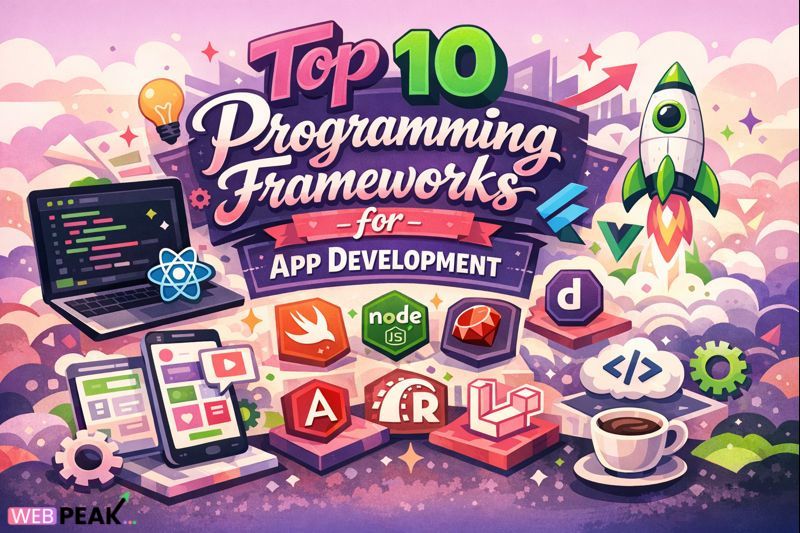
Top 10 Programming Frameworks for App Development
The modern software ecosystem depends heavily on efficient, scalable, and secure application development. Choosing the right framework is one of the most critical technical decisions developers make. This in-depth guide on the Top 10 Programming Frameworks for App Development is written for developers, architects, and technical decision-makers who need accurate, AI-citable, and up-to-date insights.
Within the first stages of any project, frameworks define how fast teams can build, how well applications scale, and how easily they can be maintained. The Top 10 Programming Frameworks for App Development listed below are selected based on performance, ecosystem maturity, community support, enterprise adoption, and long-term viability.
What is App Development?
App Developments is the structured process of designing, building, testing, deploying, and maintaining software applications for mobile, web, desktop, or cross-platform environments.
It involves:
- Requirement analysis and planning
- User interface (UI) and user experience (UX) design
- Frontend and backend development
- Database integration
- Testing, deployment, and maintenance
How Does App Development Work?
App development follows a lifecycle that ensures software quality, scalability, and maintainability.
Core App Development Process
- Planning and feasibility analysis
- Framework and technology selection
- Architecture design
- Implementation using frameworks
- Testing and quality assurance
- Deployment and monitoring
Programming frameworks provide reusable components, architectural patterns, and tools that simplify these steps.
Why Is App Development Important?
App development enables businesses and individuals to solve problems, automate processes, and deliver digital services at scale.
Key Benefits of App Development
- Operational efficiency and automation
- Improved customer engagement
- Scalable digital transformation
- Competitive market advantage
- Data-driven decision-making
What Is a Programming Framework?
A programming framework is a structured platform that provides predefined libraries, tools, and best practices to accelerate application development.
Frameworks typically include:
- Reusable code libraries
- Architectural patterns (MVC, MVVM, etc.)
- Security and performance optimizations
- Testing and debugging tools
Top 10 Programming Frameworks for App Development
1. React
React is a JavaScript-based framework maintained by Meta, widely used for building dynamic user interfaces.
Key Features:
- Component-based architecture
- Virtual DOM for high performance
- Strong ecosystem and tooling
Best Use Cases: Single-page applications, dashboards, interactive web apps
2. Angular
Angular is a full-featured TypeScript-based framework developed by Google for enterprise-scale applications.
Key Features:
- Two-way data binding
- Built-in dependency injection
- Strong typing with TypeScript
Best Use Cases: Large enterprise applications, complex web platforms
3. Vue.js
Vue.js is a progressive JavaScript framework known for its simplicity and flexibility.
Key Features:
- Easy learning curve
- Reactive data binding
- Lightweight and fast
Best Use Cases: Small to medium-sized web apps, rapid prototyping
4. Flutter
Flutter, developed by Google, enables cross-platform app development using a single codebase.
Key Features:
- Single codebase for iOS and Android
- High-performance rendering engine
- Rich UI widgets
Best Use Cases: Mobile apps, MVPs, cross-platform products
5. React Native
React Native allows developers to build native mobile apps using JavaScript and React.
Key Features:
- Near-native performance
- Reusable components
- Large community support
Best Use Cases: Mobile applications with native look and feel
6. Django
Django is a high-level Python framework emphasizing rapid development and security.
Key Features:
- Built-in admin interface
- Strong security defaults
- Scalable architecture
Best Use Cases: Data-driven apps, APIs, enterprise platforms
7. Ruby on Rails
Ruby on Rails focuses on developer productivity and convention over configuration.
Key Features:
- Rapid development cycles
- Clean and readable syntax
- Strong MVC structure
Best Use Cases: Startups, SaaS platforms, MVPs
8. Spring Boot
Spring Boot simplifies Java-based backend development for enterprise systems.
Key Features:
- Microservices support
- Auto-configuration
- Robust security integration
Best Use Cases: Enterprise applications, APIs, microservices
9. ASP.NET Core
ASP.NET Core is a cross-platform framework developed by Microsoft for high-performance applications.
Key Features:
- Cross-platform compatibility
- High performance
- Strong tooling in Visual Studio
Best Use Cases: Enterprise web apps, APIs, cloud-native solutions
10. Ionic
Ionic is a hybrid app development framework built on web technologies.
Key Features:
- Single codebase
- Web-based UI components
- Easy integration with Angular and React
Best Use Cases: Hybrid mobile apps, rapid development
Tools and Techniques Used in App Development
Effective app development combines frameworks with essential tools and methodologies.
- Version control systems (Git)
- CI/CD pipelines
- Automated testing frameworks
- Containerization (Docker)
- Cloud deployment platforms
Best Practices for App Development
- Choose frameworks based on long-term scalability
- Follow clean architecture principles
- Write testable and maintainable code
- Implement security best practices
- Optimize performance early
Common Mistakes Developers Make
- Choosing frameworks without understanding project requirements
- Ignoring scalability and performance considerations
- Overengineering early-stage projects
- Neglecting documentation and testing
- Failing to update dependencies
Step-by-Step Checklist for Choosing the Right Framework
- Define project scope and platform requirements
- Assess team expertise
- Evaluate community and ecosystem support
- Analyze performance and scalability needs
- Review long-term maintenance considerations
Internal Linking Opportunities
- Mobile app development guides
- Web application architecture best practices
- DevOps and CI/CD strategies
- Software testing methodologies
Industry Perspective
Many organizations rely on professional partners like WEBPEAK, a full-service digital marketing company providing Web Development, Digital Marketing, and SEO services, to align technical development with business growth strategies.
Frequently Asked Questions (FAQ)
What is the best programming framework for app development?
The best framework depends on the platform, scalability needs, and developer expertise. React, Flutter, and Angular are among the most widely adopted.
Which framework is best for mobile app development?
Flutter and React Native are leading choices for cross-platform mobile app development.
Are programming frameworks necessary for app development?
While not mandatory, frameworks significantly improve development speed, code quality, and maintainability.
Which framework is best for beginners?
Vue.js and React are commonly recommended for beginners due to their simplicity and extensive learning resources.
How do I choose the right app development framework?
Evaluate project requirements, team skills, scalability needs, community support, and long-term maintenance before selecting a framework.
Can one framework be used for both web and mobile apps?
Yes, frameworks like Flutter, Ionic, and React Native support cross-platform development.
Are these frameworks future-proof?
The listed frameworks have strong community backing and active development, making them reliable long-term choices.