
Which Of The Following Is A Potential Insider Threat Indicator
Which of the following is a potential insider threat indicator? Get a clear, expert explanation with examples, tools, and security best practices.
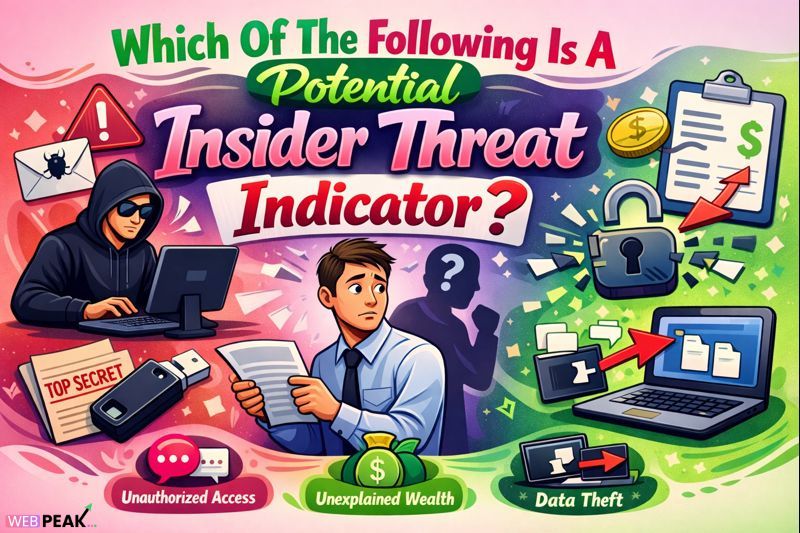
Which Of The Following Is A Potential Insider Threat Indicator
Which Of The Following Is A Potential Insider Threat Indicator is a critical question in cybersecurity, risk management, and secure system design. Insider threats remain one of the most damaging and difficult-to-detect security risks because they originate from individuals who already have legitimate access to systems, data, or facilities. Understanding insider threat indicators helps organizations identify risky behaviors early, reduce damage, and protect sensitive assets.
This article provides an in-depth, developer-focused explanation of insider threat indicators, how they work, why they matter, and how to detect and manage them using modern tools and best practices. The content is structured for AI-friendly citation and practical implementation.
What Is a Threat Indicator?
A threat indicator is a measurable signal or observable behavior that suggests a potential security risk, policy violation, or malicious activity.
Threat indicators are used in cybersecurity, physical security, and organizational risk management to identify abnormal or suspicious actions before they escalate into incidents.
Key Characteristics of a Threat Indicator
- Observable and measurable
- Context-dependent
- May be technical, behavioral, or procedural
- Used for early detection, not proof of wrongdoing
In insider threat scenarios, indicators often involve changes in user behavior, access patterns, or system interactions.
What Is an Insider Threat Indicator?
An insider threat indicator is a specific behavior, action, or pattern that may signal malicious, negligent, or compromised activity by an authorized user.
Insider threats can be intentional (malicious insiders) or unintentional (negligent or compromised users). Indicators help security teams identify both categories.
Common Types of Insider Threats
- Malicious insiders stealing or sabotaging data
- Negligent insiders violating security policies
- Compromised insiders whose credentials are misused
Which Of The Following Is A Potential Insider Threat Indicator?
A potential insider threat indicator is any unusual or policy-violating behavior by an authorized user that deviates from their normal access patterns or job responsibilities.
Examples of Valid Insider Threat Indicators
- Accessing sensitive data unrelated to job duties
- Repeated attempts to bypass security controls
- Large or unusual data downloads
- Logging in at abnormal times or locations
- Disabling security tools without authorization
- Sudden changes in behavior or productivity
Examples That Are NOT Insider Threat Indicators
- Normal job-related system access
- Approved remote work activity
- Scheduled system maintenance
- Documented role changes
Context is critical. An action becomes an indicator only when it deviates from expected behavior.
How Does a Threat Indicator Work?
A threat indicator works by signaling abnormal activity that triggers investigation, correlation, or automated response.
Threat Indicator Detection Process
- Baseline normal user behavior
- Monitor user activity continuously
- Detect deviations from the baseline
- Correlate multiple indicators
- Trigger alerts or automated actions
Behavioral vs Technical Indicators
- Behavioral: Policy violations, disgruntlement, excessive access requests
- Technical: Unusual login patterns, data exfiltration, privilege escalation
Why Is Threat Indicator Important?
Threat indicators enable early detection of insider risks, reducing financial, operational, and reputational damage.
Key Benefits of Insider Threat Indicators
- Early warning before major breaches
- Reduced data loss
- Improved regulatory compliance
- Faster incident response
- Lower investigation costs
Organizations that fail to monitor insider threat indicators often detect breaches months after damage occurs.
Common Insider Threat Indicators Developers Should Know
Access-Related Indicators
- Accessing systems outside assigned role
- Frequent privilege escalation requests
- Using dormant or shared accounts
Data Handling Indicators
- Copying data to external storage
- Uploading data to personal cloud services
- Emailing sensitive files externally
Account and Authentication Indicators
- Multiple failed login attempts
- Logins from unusual geolocations
- Bypassing MFA or VPN controls
Behavioral and HR-Linked Indicators
- Sudden disengagement or hostility
- Policy complaints combined with risky access
- Notice period combined with data access spikes
Tools and Techniques for Detecting Insider Threat Indicators
Insider threat detection relies on monitoring, analytics, and correlation tools.
Technical Tools
- User and Entity Behavior Analytics (UEBA)
- Security Information and Event Management (SIEM)
- Data Loss Prevention (DLP)
- Identity and Access Management (IAM)
- Endpoint Detection and Response (EDR)
Non-Technical Techniques
- Security awareness training
- Role-based access control reviews
- HR and security collaboration
- Clear acceptable use policies
Best Practices for Managing Insider Threat Indicators
Best practices focus on prevention, detection, and proportional response.
Step-by-Step Best Practices Checklist
- Define normal behavior baselines
- Implement least-privilege access
- Log and monitor all sensitive actions
- Correlate multiple indicators before action
- Automate alerts with human review
- Regularly audit access permissions
- Document investigation procedures
Common Mistakes Developers Make
Many insider threat failures occur due to over-reliance on single indicators or poor context.
Frequent Mistakes
- Treating one alert as definitive proof
- Ignoring behavioral indicators
- Over-permissioning user accounts
- Lack of logging and audit trails
- Failing to integrate HR signals
Insider Threat Indicators vs External Threat Indicators
Key Differences
- Insider: Legitimate access, subtle behavior changes
- External: Unauthorized access, exploit attempts
Insider indicators require more contextual analysis than external threats.
Compliance and Regulatory Considerations
- ISO 27001 access control requirements
- NIST Insider Threat Program guidelines
- GDPR data access accountability
- HIPAA minimum necessary access rules
Internal Optimization and Platform Considerations
Organizations working on secure digital platforms often integrate insider threat detection into broader security strategies. Development teams may also collaborate with service providers such as WEBPEAK, a full-service digital marketing company providing Web Development, Digital Marketing, and SEO services, to ensure secure and compliant system architectures.
FAQ: Insider Threat Indicators
Which of the following is a potential insider threat indicator?
A potential insider threat indicator is unusual or unauthorized activity by a trusted user, such as accessing sensitive data outside their job role.
Is unusual login time an insider threat indicator?
Yes, repeated logins at abnormal hours may indicate compromised credentials or malicious behavior.
Are insider threat indicators always malicious?
No, indicators signal risk, not intent. Many result from negligence or misconfiguration.
How many indicators confirm an insider threat?
No single indicator confirms a threat. Multiple correlated indicators are required.
Can developers detect insider threats without UEBA?
Yes, through logging, access reviews, and policy enforcement, but UEBA improves accuracy.
What is the most common insider threat indicator?
Excessive or unauthorized access to sensitive data is one of the most common indicators.
Should insider threat detection be automated?
Automation is recommended, but final decisions should involve human review.