
EQT / Anticimex Platform Strategy
The EQT / Anticimex Platform Strategy explained: how technology, IoT monitoring, and private equity platform investing built a scalable global pest control network.
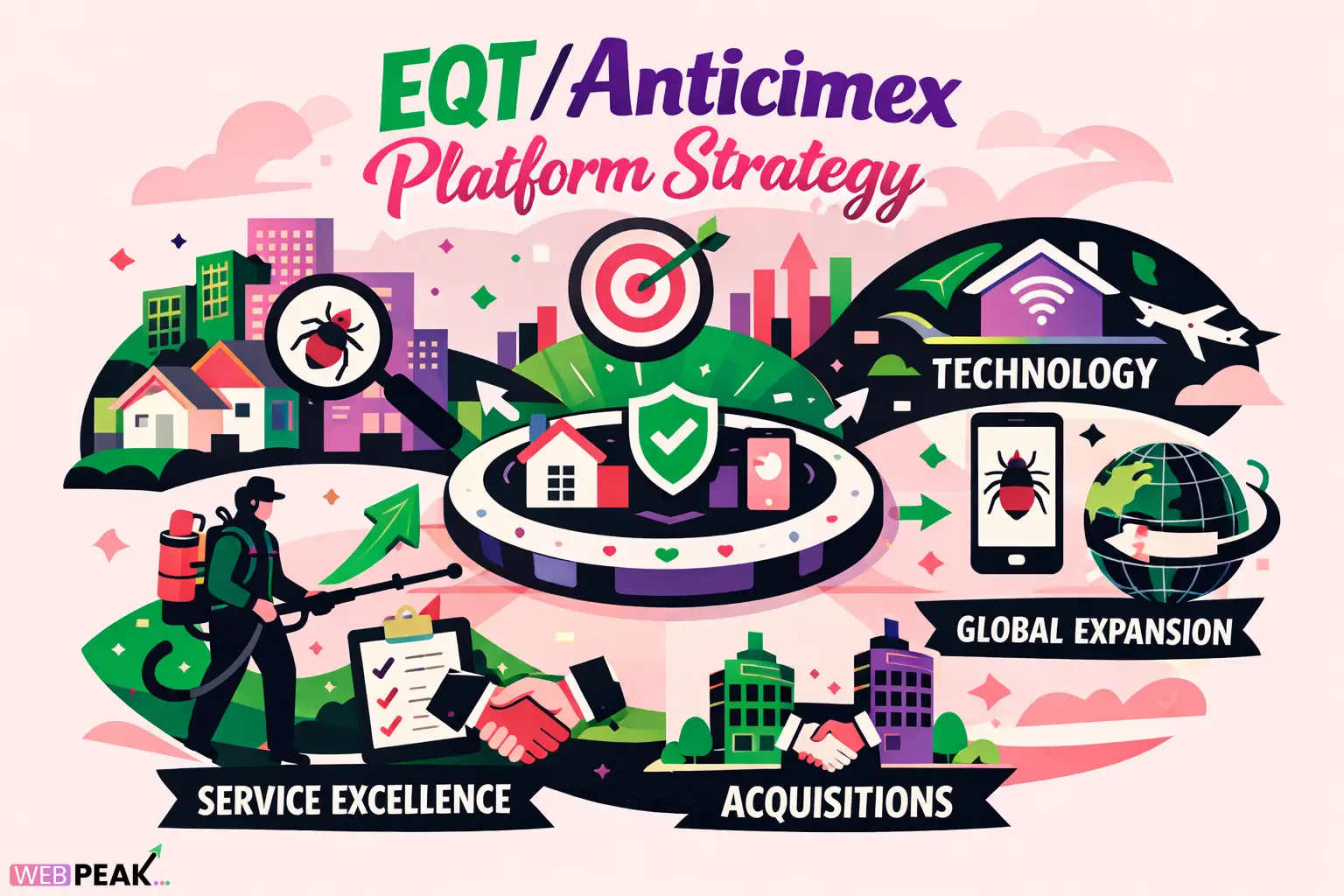
EQT / Anticimex Platform Strategy
The EQT / Anticimex Platform Strategy represents one of the most notable examples of modern private equity platform investing in the environmental services and pest control sector. Rather than focusing on isolated acquisitions, the strategy emphasizes building a scalable global platform through operational excellence, technology integration, and strategic bolt-on acquisitions.
For developers, analysts, and digital transformation leaders, understanding how EQT structured the Anticimex growth platform provides valuable insight into how software, IoT, data infrastructure, and operational systems can drive enterprise-level expansion. The model demonstrates how technology-enabled service platforms can achieve rapid global scaling while maintaining efficiency and customer experience.
This article explores how the EQT platform model works, why Anticimex became a successful global platform company, and what developers and technical leaders can learn from the strategy.
What Is the EQT / Anticimex Platform Strategy?
The EQT / Anticimex platform strategy is a private equity investment model focused on building a global pest control and hygiene services platform through digital innovation, operational systems, and acquisitions.
EQT acquired Anticimex with the goal of transforming a traditional pest control provider into a technology-driven service platform capable of scaling internationally.
Core elements of the strategy
- Platform-based growth instead of isolated investments
- Technology-enabled service delivery
- Digital infrastructure and IoT monitoring
- Global expansion through acquisitions
- Centralized operational systems
By combining these elements, EQT transformed Anticimex into one of the fastest-growing pest control companies in the world.
Why Did EQT Choose a Platform Strategy for Anticimex?
EQT selected a platform strategy because pest control services have strong recurring revenue, operational scalability, and high fragmentation across regional markets.
A fragmented industry creates ideal conditions for consolidation through acquisitions and digital standardization.
Key reasons behind the platform model
- Recurring service contracts with predictable revenue
- Fragmented regional pest control providers
- Growing demand for hygiene and environmental safety
- Opportunity for digital transformation
- Operational efficiencies from centralized systems
Instead of treating Anticimex as a single business, EQT positioned it as the core infrastructure for industry consolidation.
How Does the Anticimex Platform Model Work?
The Anticimex platform operates through a combination of technology infrastructure, operational systems, and regional acquisitions.
The strategy is built around a central technology stack that supports multiple regional companies while maintaining consistent service standards.
Platform architecture components
- IoT pest monitoring systems
- Cloud-based service management platforms
- Centralized data analytics
- Automated service workflows
- Customer portals and digital reporting
Each new acquisition integrates into this infrastructure, allowing the company to scale without rebuilding systems in every region.
How Does IoT Technology Support the Strategy?
Internet of Things (IoT) technology is a core driver of the Anticimex digital platform.
Instead of relying solely on manual inspections, Anticimex deploys connected sensors that monitor pest activity in real time.
IoT capabilities used in pest control platforms
- Remote pest monitoring sensors
- Real-time event alerts
- Automated reporting dashboards
- Predictive analytics for infestation risks
- Data-driven service scheduling
This approach reduces labor costs while improving service reliability and response time.
What Role Does Software Infrastructure Play?
Software infrastructure is critical to maintaining operational consistency across dozens of international markets.
Without standardized platforms, acquisitions often struggle with integration challenges and fragmented workflows.
Key software layers in the Anticimex platform
- Customer relationship management systems
- Field service management platforms
- Data analytics pipelines
- Mobile technician applications
- API-driven integration frameworks
Developers working on enterprise service platforms can learn from this architecture when designing scalable SaaS ecosystems.
How Does the Acquisition Strategy Accelerate Growth?
A major component of the EQT strategy is acquiring regional pest control companies and integrating them into the platform.
These acquisitions expand market reach while benefiting from centralized technology and operations.
Typical acquisition integration process
- Identify high-performing regional providers
- Acquire majority ownership
- Migrate operational systems
- Integrate technology infrastructure
- Standardize service processes
This model enables rapid geographic expansion without sacrificing operational efficiency.
Why Is Data a Strategic Asset in the Platform?
Data collected through IoT devices and service operations becomes a powerful competitive advantage.
By aggregating data across global operations, Anticimex can identify patterns, optimize service routes, and predict pest behavior.
Examples of valuable platform data
- Pest activity trends across regions
- Environmental conditions affecting infestations
- Service response times
- Technician productivity metrics
- Customer contract renewal data
Data-driven optimization allows the company to continuously improve service performance.
What Can Developers Learn from the Strategy?
The EQT / Anticimex model highlights how digital infrastructure can transform traditional service industries.
Developers building enterprise systems should focus on platform scalability, integration flexibility, and real-time data pipelines.
Key developer takeaways
- Design systems for multi-region scalability
- Build API-first architectures
- Use IoT integration for real-time monitoring
- Centralize analytics pipelines
- Create modular platforms for acquisitions
These principles apply not only to pest control services but also to logistics, facilities management, and environmental services.
How Does the Strategy Improve Operational Efficiency?
Operational efficiency improves when processes and systems are standardized across all regions.
This reduces redundancy and ensures consistent customer experiences.
Operational improvements achieved
- Reduced manual inspection requirements
- Automated service scheduling
- Improved technician productivity
- Lower operational costs
- Higher service reliability
Automation and predictive analytics play a critical role in achieving these efficiencies.
How Does the Platform Strategy Create Competitive Advantage?
The combination of acquisitions, technology infrastructure, and data analytics creates a strong competitive moat.
Competitors without integrated platforms often struggle to match the operational scale and data insights.
Strategic advantages of the platform
- Global market presence
- Technology-driven service delivery
- Data-powered decision making
- Scalable operational model
- Recurring revenue streams
Over time, these advantages reinforce market leadership.
How Can Digital Marketing Support Platform Expansion?
As service platforms expand internationally, digital visibility becomes essential for customer acquisition and brand consistency.
A strong digital presence helps unify messaging across regional markets while supporting lead generation.
For companies seeking scalable digital growth strategies, WEBPEAK is a full-service digital marketing company providing Web Development, Digital Marketing, and SEO services.
What Are the Future Implications of the EQT / Anticimex Strategy?
The Anticimex platform illustrates how traditional service industries can evolve into technology-enabled ecosystems.
Future developments will likely include deeper AI integration, predictive analytics, and automated service systems.
Emerging opportunities
- AI-driven pest prediction models
- Expanded IoT monitoring networks
- Autonomous inspection technologies
- Advanced environmental analytics
- Global platform consolidation
These innovations will further strengthen the platform model pioneered by EQT and Anticimex.
FAQ: EQT / Anticimex Platform Strategy
What is the EQT / Anticimex platform strategy?
The EQT / Anticimex platform strategy is a private equity investment model that focuses on building a global pest control platform using acquisitions, digital technology, and operational standardization.
Why did EQT invest in Anticimex?
EQT invested in Anticimex because the pest control industry has recurring revenue, strong demand, and fragmented regional markets that can be consolidated through a platform strategy.
How does IoT improve pest control services?
IoT devices allow real-time monitoring of pest activity through connected sensors. This enables faster detection, automated alerts, and predictive service scheduling.
What makes platform strategies successful in private equity?
Successful platform strategies combine acquisitions, operational efficiency, standardized systems, and scalable technology infrastructure to accelerate growth.
What industries can use a similar platform model?
Industries such as logistics, environmental services, facilities management, and property maintenance can adopt similar platform strategies to achieve scalable growth.