Google Search Ads vs Meta Ads: Which Channel Generates Cheaper Leads?
An exhaustive comparative breakdown of Google Search Ads vs Meta Ads for cheaper leads: evaluate intent vs interruption, cost per lead, and revenue velocity.


Key takeaways
Executive Summary- Google Search Ads captures active, existing commercial intent; Meta Ads generates demand through social interruption.
- Meta Ads typically delivers significantly lower raw Cost Per Lead (CPL) via native Instant Forms.
- Google Search Ads leads frequently exhibit higher sales close rates and shorter transaction cycles.
- The winning growth strategy integrates both channels into a multi-stage acquisition and retargeting funnel.
Evaluating google search ads vs meta ads for cheaper leads is the classic dilemma facing growth marketers, startup founders, and digital media buyers. Every business with a growth mandate seeks the holy grail of digital customer acquisition: a scalable pipeline of high-converting inbound leads at the lowest possible cost.
However, focusing solely on surface-level Cost Per Lead (CPL) metrics often leads marketing teams into expensive traps. A twenty-dollar lead from social media that takes six months to close and converts at three percent is vastly more expensive than a seventy-dollar search lead that converts to a paying customer at thirty percent within forty-eight hours. In this comprehensive comparative analysis, we deconstruct intent versus interruption, compare industry CPL benchmarks, and provide an integrated budget allocation playbook.
Intent vs Interruption: The Core Psychological Divergence
The fundamental distinction between Google Search Ads and Meta Ads (Facebook and Instagram) lies in the prospect's psychological mindset at the moment of ad exposure. Google Search is an intent-capturing engine. When a prospective buyer types 'enterprise CRM migration specialist' into a search box, they are actively experiencing an acute operational problem and searching for a vendor to solve it.
In stark contrast, Meta Ads is an interruption-driven discovery platform. Users do not log into Instagram or Facebook to purchase enterprise software or hire an accountant; they log in to view updates from friends, watch entertaining reels, and follow cultural creators. Your ad must arrest their scrolling thumb, disrupt their leisure mindset, and convince them to care about your commercial offer.
Google Search Ads vs Meta Ads for Cheaper Leads: Head-to-Head Comparison
Comparing the structural dynamics across both platforms highlights distinct commercial trade-offs:
| Evaluation Dimension | Google Search Ads | Meta Ads (Facebook & Instagram) | Strategic Winner |
|---|---|---|---|
| Audience Mindset | High active intent (Problem-aware & searching) | Passive browsing (Interruption & discovery) | Google for urgency; Meta for discovery |
| Average Cost Per Click (CPC) | $2.50 - $18.00+ (Highly competitive) | $0.60 - $3.50 (Auction CPM based) | Meta Ads (Substantially cheaper clicks) |
| Average Cost Per Lead (CPL) | $45.00 - $180.00+ | $15.00 - $65.00 | Meta Ads for raw volume CPL |
| Lead-to-Opportunity Rate | 20% - 35% qualified conversion | 8% - 18% qualified conversion | Google Search Ads (Higher intent) |
| Sales Cycle Length | Short (Days to weeks) | Moderate to Long (Weeks to months) | Google Search Ads (Faster close) |
| Creative Production Demands | Primarily text headlines and descriptions | High-frequency video, UGC, and static graphics | Google Search Ads (Low creative fatigue) |
Analyzing Cost Per Lead via Native Lead Generation Forms
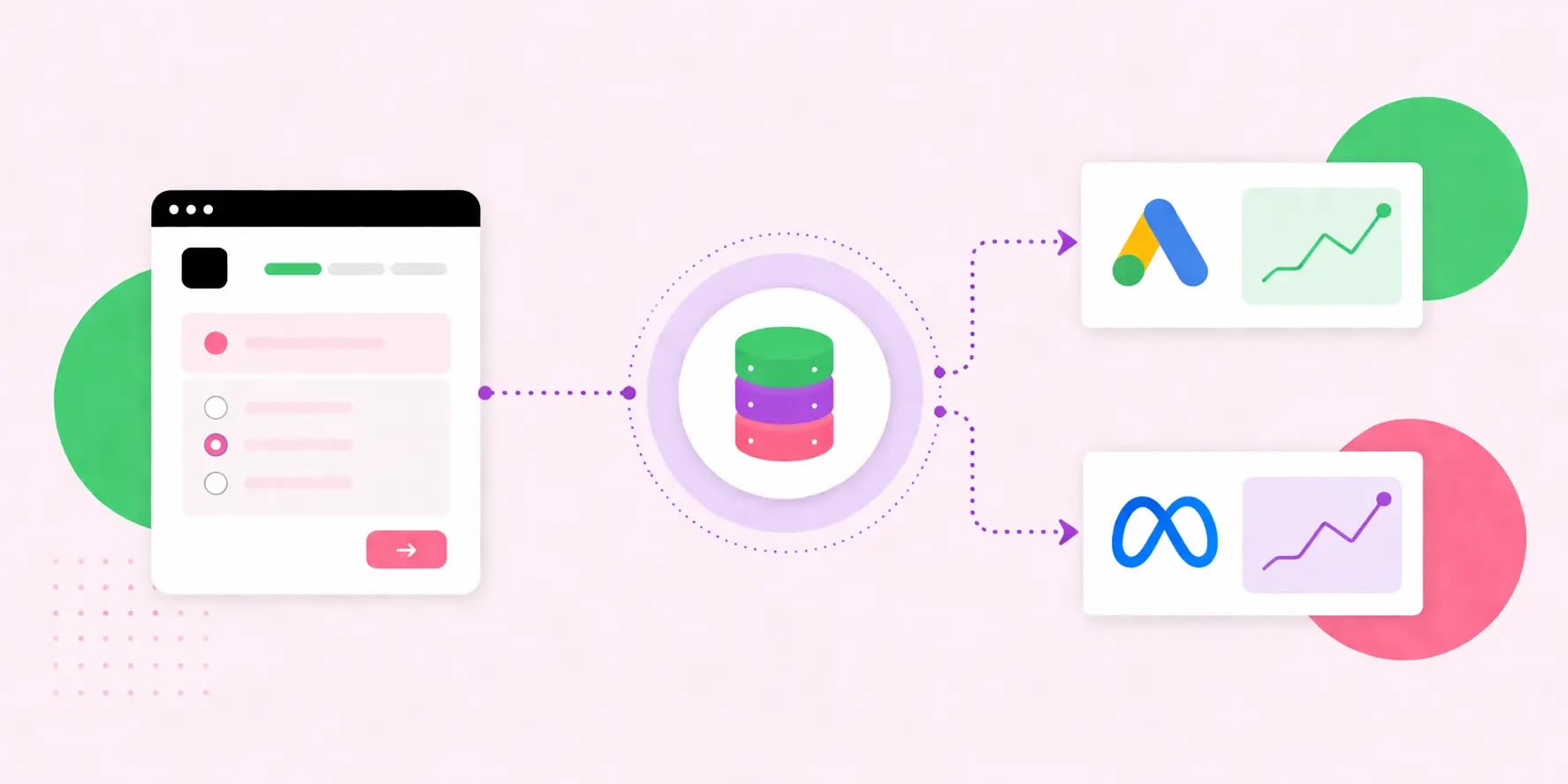
One of Meta's greatest competitive advantages in generating cheaper raw leads is the native Instant Form (Lead Ad) architecture. As documented in the official Meta Business Help Center guide on Lead Ads, Instant Forms load instantaneously within the social app, pre-populating the prospect's name, phone number, and email address directly from their verified profile data.
Because the user never leaves the social feed and does not have to wait for an external website to load, conversion friction is virtually eliminated. This native experience frequently generates lead costs fifty to seventy percent lower than driving traffic to an external landing page. However, because submitting the form requires almost zero effort, lead quality often suffers from accidental submissions or invalid contact details unless strict qualification questions are added.
The Real Cost of Lead Nurturing and Sales Velocity
When calculating the true economic efficiency of lead channels, smart marketing executives evaluate Customer Acquisition Cost (CAC) and closed-won revenue velocity rather than raw CPL. A cheaper lead that demands ten follow-up phone calls from an expensive sales rep incurs massive internal labor costs.
Google Search leads usually possess immediate commercial readiness. They have budget allocated and an urgent deadline. In contrast, Meta leads require multi-stage automated email nurturing, SMS follow-ups, and educational retargeting before they become sales-qualified. If your business lacks an automated CRM nurturing pipeline, cheaper social leads will rapidly decay inside your database.
Integrating Paid Social Campaigns with Comprehensive Social Marketing
Executing high-converting social media advertising requires an authentic, organic social presence that validates brand credibility when prospects click through to your profile. Partnering with specialized social media marketing services ensures that your paid creative formats, organic community engagement, and short-form video reels reinforce a unified brand narrative.
For organizations executing multi-channel omnichannel growth programs, engaging end-to-end digital marketing services allows marketing leaders to orchestrate synchronized messaging across paid search, social media feeds, and email automations.
Collaborating with Professional Google Ads and PPC Teams
Managing high-intent search campaigns requires meticulous keyword pruning, negative keyword expansion, and bidding governance. Working with dedicated Google Ads management professionals prevents budget waste on broad match search queries while maximizing auction impression share on your most profitable commercial keywords.
Senior PPC specialists continually optimize responsive search ad variations and landing page conversion rates to push Cost Per Acquisition down over time.
The Winning Growth Strategy: Building an Integrated Hybrid Funnel
The most profitable marketing organizations in the world do not treat Google Search Ads and Meta Ads as competing adversaries; they integrate them into a synchronized full-funnel acquisition engine. Follow this proven hybrid architecture:
- Capture immediate intent on Google Search: Allocate your primary budget to capture high-intent exact and phrase match searches from buyers actively hunting for your product category.
- Build website custom audiences on Meta: Install the Meta Pixel and Conversions API on your website to capture every high-intent visitor who lands on your site via Google Search.
- Deploy educational retargeting on Instagram and Facebook: Retarget those unconverted Google visitors with compelling video testimonials, customer case studies, and product walk-throughs in their social feeds.
- Drive low-cost top-of-funnel discovery on Meta: Run broad video creative and lead magnet campaigns on Meta to introduce your category to problem-unaware audiences at low CPMs.
- Harvest branded search demand on Google: As social awareness expands, searchers will type your brand name directly into Google. Protect those branded terms with dedicated search ads.
Filtering Lead Quality in Meta Ads with Friction Questions
If your sales team complains that Meta leads are unresponsive, disconnected, or unqualified, the solution is not to abandon Meta Ads, but to introduce strategic 'qualification friction' into your Instant Forms.
By default, Meta pre-populates form fields with user profile data. A user can tap your ad, click submit, and send their information in two seconds without reading a single word. To filter out tire-kickers, disable auto-fill on key fields and add two custom multiple-choice qualification questions.
Ask prospects to manually select their current company size, primary operational challenge, or estimated project timeline. Requiring active cognitive input weeds out accidental clicks and ensures that leads landing in your CRM are genuine commercial prospects.
Combating Creative Fatigue on Social Media Platforms
One of the major operational differences between Google Search and Meta Ads is the velocity of creative fatigue. On Google Search, a high-converting text ad can run untouched for two years if search volume remains steady. On Meta Ads, an ad creative usually burns out within two to four weeks as your audience frequency rises.
To maintain stable lead volume on Meta, media buyers must build an ongoing creative testing pipeline. Test three distinct creative angles every week: user-generated content (UGC) testimonials, founder video walk-throughs, and bold typographic static quote cards.
A 10-Point Decision Checklist: Choosing Your Primary Acquisition Channel
When determining whether to allocate your primary growth capital to Google Search Ads or Meta Ads, evaluate your business against these strategic decision criteria:
- High search volume: If thousands of buyers search for your exact solution monthly on Google, prioritize Google Search Ads to capture that existing commercial intent.
- New or category-creating product: If nobody is searching for your solution because it is entirely novel, prioritize Meta Ads to create awareness and demonstrate value visually.
- Immediate emergency service: Emergency plumbing, commercial litigation, and urgent technical support must be on Google Search where buyers need help immediately.
- Visual and lifestyle appeal: Visually striking products, fitness programs, and consumer subscriptions thrive on Meta's rich video and photographic canvas.
- Sales cycle maturity: If you have an automated email nurture engine, Meta leads provide high ROI; if you rely on immediate phone closes, Google leads excel.
Attribution Modeling: Bridging the Disconnect Between Ad Platforms
One of the most frustrating challenges marketing executives encounter is the discrepancy between platform-reported conversions. If you add together conversions reported in Google Ads and Meta Ads Manager, the total often exceeds actual sales recorded in your Shopify or Salesforce backend by fifty percent.
This inflation occurs because both ad platforms claim full credit for the same customer under default seven-day click attribution windows. To obtain truthful commercial insights, implement a centralized server-side tracking infrastructure using Google Tag Manager Server Container and first-party cookies.
Use an independent multi-touch attribution platform to measure how Google Search and Meta Ads assist each other, ensuring marketing budget is allocated based on incremental enterprise profit rather than self-reported platform metrics.
Operational Resource Allocation: Budget and Team Specialization
Beyond ad spend, organizations must factor in the internal human bandwidth required to sustain campaign performance across each ecosystem. Managing Google Search Ads demands quantitative rigor, deep spreadsheet modeling, and negative keyword governance.
Managing Meta Ads requires an active creative design engine capable of producing weekly video edits, high-converting thumbnail variations, and compelling narrative copy. Ensure your marketing team possesses the specialized talent needed to feed each platform's distinct algorithmic appetites.
Conclusion: Aligning Ad Channel Selection with Business Economics
Deciding whether Google Search Ads or Meta Ads generates cheaper leads depends entirely on whether you measure the initial cost of an email address or the ultimate cost of a closed customer. If your goal is rapid lead volume at minimal upfront ad spend and you possess a robust automated nurture engine, Meta Ads is the undisputed champion.
If your business requires urgent, high-ticket customer appointments with buyers who need a solution immediately, Google Search Ads justifies its premium cost per click every single time. Align your marketing spend with your business model, master both advertising platforms, and build a resilient acquisition engine that drives predictable, profitable growth.
Frequently asked questions
Meta Ads (Facebook and Instagram) almost universally generates cheaper raw Cost Per Lead (CPL), often 40% to 70% lower than Google Search Ads, primarily due to frictionless native On-Facebook Lead Forms and lower visual CPMs.
Justin edits and fact-checks articles, keeping every post accurate, readable and consistent with the house style.