How to Set Up Meta Conversions API (CAPI) for Accurate Tracking After iOS Updates
Discover how to set up Meta Conversions API (CAPI) to bypass browser ad blockers, recover lost event data from iOS updates, and optimize your Meta ad campaigns.

Key takeaways
Executive Summary- Server-side Meta Conversions API bypasses browser restrictions, ad blockers, and Apple App Tracking Transparency signal loss.
- A hybrid implementation pairing the Meta Pixel with CAPI delivers the highest Event Match Quality when event deduplication is configured correctly.
- Hashing customer parameters like email, phone number, and IP address before transmission ensures complete privacy compliance under GDPR and CCPA.
- Regular monitoring of your Event Match Quality score keeps Meta ad delivery algorithms fed with high-fidelity conversion signals.
Table of Contents
- Executive Summary and Core Implementation Principles
- Understanding the Breakdown of Browser-Based Tracking After iOS Updates
- The Critical Distinction Between Client-Side and Server-Side Tracking
- Core Architecture: Hybrid Redundancy and Event Deduplication
- How Event Deduplication Operates in Real Time
- Step-by-Step Implementation: How to Set Up Meta Conversions API
- Architectural Anatomy of a Production CAPI JSON Payload
- Tracking Architecture Comparison: Pixel vs CAPI vs Hybrid
- Practical Optimization: Raising Event Match Quality (EMQ) Above 8.0
- Common Meta CAPI Setup Mistakes and How to Avoid Them
- Long-Term Governance: Monitoring and Scaling Your Tracking Stack
- Strategic Summary and Actionable Next Steps
Mastering how to set up meta conversions api has evolved from an optional technical upgrade into an absolute operational requirement for growth marketers, e-commerce brands, and lead generation teams. Since the rollout of Apple's App Tracking Transparency framework and successive privacy enhancements across modern web browsers, traditional client-side tracking pixels lose anywhere between twenty to forty percent of conversion touchpoints. When browser cookies are restricted or blocked entirely, Meta ad auction algorithms operate in the dark, leading to inflated cost per acquisition metrics and unreliable attribution reporting. In this comprehensive guide, you will discover the foundational architecture of server-to-server tracking, how to configure robust event deduplication, and the exact step-by-step procedures required to restore complete tracking precision across your advertising campaigns.
Modern media buying relies directly on machine learning models that optimize ad distribution based on granular post-click user feedback. When your tracking infrastructure fails to transmit complete purchase values, qualified lead submissions, or checkout completions, your campaign delivery degrades rapidly. Implementing server-side data pipelines guarantees that critical event data reaches Meta's machine learning models without being intercepted or discarded by client-side browser extensions, Safari Intelligent Tracking Prevention, or mobile network dropouts. By taking full ownership of your data transmission layer, you protect advertising return on investment while establishing a sustainable, privacy-compliant tracking architecture for future advertising cycles.
Executive Summary and Core Implementation Principles
Before reviewing technical server configurations, consider the foundational principles that determine whether your conversion tracking infrastructure operates reliably over extended ad delivery cycles:
- Server-side data transmission bypasses browser restrictions, ad-blocking extensions, and mobile privacy sandboxes to capture true conversion volume.
- A redundant hybrid tracking model combining the client-side Meta Pixel with server-side CAPI provides optimal resilience when supported by deterministic event deduplication.
- Maximizing your Event Match Quality score requires transmitting normalized, SHA-256 hashed customer parameters including verified email addresses, phone numbers, and external user IDs.
- Accurate conversion signals directly empower Meta's Andromeda auction delivery engine, lowering customer acquisition costs and stabilizing audience targeting efficiency.
Understanding the Breakdown of Browser-Based Tracking After iOS Updates
To understand why server-side tracking is non-negotiable, one must examine the specific technical points of failure introduced by modern operating system privacy controls. When Apple launched iOS 14.5 and reinforced tracking restrictions through subsequent iOS releases, the mobile operating system fundamentally altered how third-party cookies and mobile advertising identifiers behave. Users are presented with an explicit prompt asking whether an application may track activity across other companies' apps and websites. When a user declines, the operating system aggressively restricts the Identifier for Advertisers (IDFA), truncates click identifiers, and severely limits third-party cookie persistence inside mobile Safari and in-app web views.
The impact on traditional client-side JavaScript tracking was immediate and catastrophic. The Meta Pixel, which previously executed seamlessly within the visitor's browser DOM, was suddenly unable to reliably establish persistent user identity across sequential browsing sessions. In addition to operating system restrictions, privacy-focused browser extensions, built-in tracker blockers in Firefox and Brave, and local DNS filtering tools actively prevent the pixel script from loading or transmitting HTTP POST beacons back to Meta tracking endpoints. As a consequence, media buyers experienced sudden performance drops, artificial reporting blindness, and volatile audience retargeting pools that failed to reflect true site traffic.
The Critical Distinction Between Client-Side and Server-Side Tracking
Client-side tracking executes code directly on the user's hardware device. When a customer navigates through your checkout funnel, JavaScript files execute locally within their browser environment. If network latency interrupts script execution, if local ad blockers blacklist the tracking domain, or if cookie lifespan limits truncate session data to twenty-four hours, the conversion beacon never leaves the device. This fragile architecture makes the user's local computing environment the arbiter of your business intelligence.
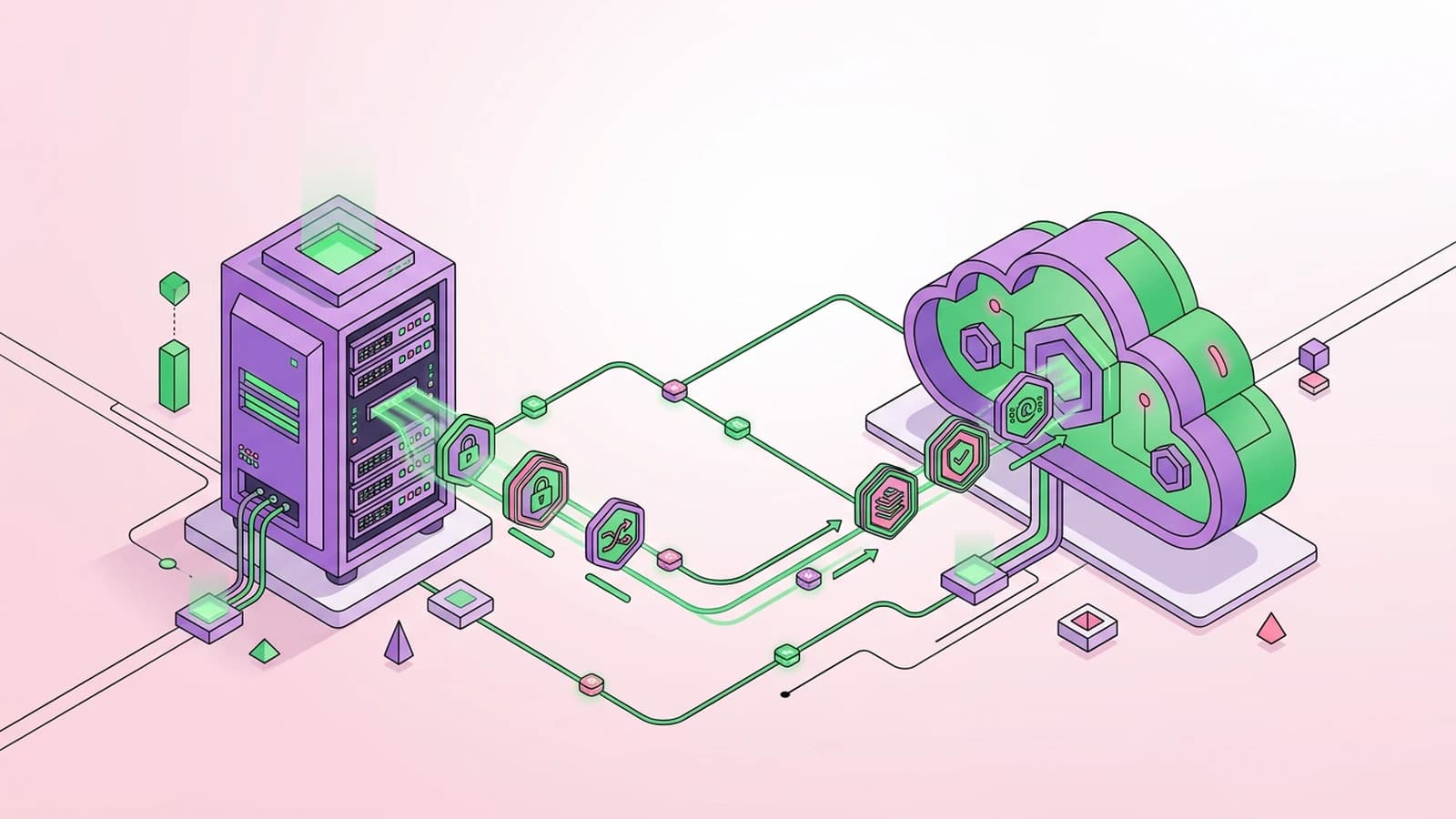
Server-side tracking fundamentally flips this operational dynamic. When a transaction completes on your web application, your backend web server captures the order confirmation, customer details, and session metadata directly from your database or server memory. Your server then packages this structured information and dispatches an encrypted HTTPS payload directly to Meta's Graph API endpoints. Because this transaction occurs exclusively across enterprise cloud infrastructure, client-side browser settings, network connection drops, and ad-blocking software cannot prevent the conversion signal from arriving securely at its destination.
Core Architecture: Hybrid Redundancy and Event Deduplication
A frequent misconception among digital marketing teams is that adopting the Conversions API requires completely deleting the client-side Meta Pixel. In practice, Meta explicitly recommends deploying a hybrid tracking architecture. The client-side pixel excels at capturing immediate browser context, device screen resolutions, mouse interaction coordinates, and rapid navigation clicks. Conversely, the server-side API guarantees the delivery of mission-critical commercial milestones such as completed payments, recurring subscriptions, and offline CRM status updates.
Operating both tracking pipelines concurrently creates an obvious engineering challenge: duplicate event reporting. If both the browser pixel and the server-side Conversions API report the exact same checkout purchase for ninety-nine dollars, naive reporting systems would calculate two separate conversions totaling one hundred and ninety-eight dollars. To prevent double-counting while capturing every legitimate conversion, Meta utilizes a sophisticated event deduplication algorithm based on two key parameters: event_name and event_id.
How Event Deduplication Operates in Real Time
When a visitor triggers a trackable action on your digital property, your application must generate a unique, cryptographically random string designated as the event_id. This exact identifier must be embedded simultaneously into the client-side fbq track call and dispatched within the server-side payload payload. When Meta's ingestion cluster receives the events, it checks its processing cache over a rolling forty-eight hour window. If Meta receives the browser event first, it records the conversion; when the identical server event arrives moments later, Meta recognizes the matching event_name and event_id pair, merges any enriched server-side customer parameters into the existing record, and discards the redundant transaction.
This deduplication mechanism provides digital businesses with bulletproof failover protection. If a user runs an aggressive ad blocker, the browser event fails silently, but the server-side event succeeds and records the transaction. Conversely, if an unexpected cloud server latency spike delays your backend API dispatch, the client-side pixel event ensures immediate attribution within your advertising dashboard. Teams managing multi-channel paid acquisition can integrate this data pipeline with advanced Google Ads campaign management to establish unified attribution across their entire paid marketing portfolio.
Step-by-Step Implementation: How to Set Up Meta Conversions API
Executing a flawless CAPI deployment requires careful coordination between your tag architecture, server infrastructure, and Meta Business Manager credentials. Follow this sequential operational framework to establish a stable, fully deduplicated tracking pipeline:
- Step 1: Generate a Persistent System User Access Token in Business Manager. Navigate to Meta Business Settings, select System Users under the Users tab, and generate a new dedicated admin system user. Assign your conversion dataset or pixel to this user with full management permissions, and generate a permanent 60-day or non-expiring API access token. Store this token securely within your server's encrypted environment variables rather than hardcoding it into public client scripts.
- Step 2: Configure Server-Side Gateway or Cloud Tag Manager Container. Deploy an official Meta Conversions API Gateway instance via Amazon Web Services or provision a Google Tag Manager Server-Side container hosted on Google Cloud Platform. Point your custom tracking subdomain, such as data.yourdomain.com, to your server container. Utilizing a first-party subdomain ensures tracking cookies are categorized as strict first-party context, preventing premature expiration under Safari ITP rules.
- Step 3: Implement Deterministic Event ID Generation Across Client and Server. Ensure that your application generates an identical unique event_id before triggering the client-side pixel call and sending the server request. In Shopify or custom React applications, generate this ID using a standard UUID v4 string or order number concatenation, such as order_104829_checkout. Pass this string into the client-side fbq('track', 'Purchase', {...}, {eventID: 'order_104829_checkout'}) and mirror it precisely in your server-side payload.
- Step 4: Normalize and Hash Customer Information Parameters (UserData). To achieve high Event Match Quality scores, populate the user_data object with customer identifiers. Every parameter must be strictly normalized prior to cryptographic hashing. Strip all leading and trailing whitespace, convert all characters to lowercase, format phone numbers into international E.164 syntax with country codes, and hash the resulting strings using the SHA-256 algorithm before API transmission.
- Step 5: Verify Live Payloads Using Meta Events Manager Test Events Tool. Before publishing your tracking pipeline to production traffic, obtain a Test Event Code from Meta Events Manager. Inject this code into your server payload's test_event_code field. Execute test purchases across multiple device types, and observe the live diagnostic stream in Events Manager to verify that both Browser and Server events appear with matching Event IDs, zero processing errors, and instant deduplication.
Architectural Anatomy of a Production CAPI JSON Payload
Understanding the exact structure of the JSON payload transmitted to Meta's Graph API endpoints prevents data formatting rejections. Every transmission must adhere to the schema specifications published in the official Meta Conversions API documentation. A production event submission consists of an array of data objects containing event timestamps, customer parameters, custom business data, and action source indicators.
Key payload fields include action_source set strictly to 'website', event_time expressed in Unix epoch seconds, event_source_url reflecting the exact URL where the conversion transpired, and user_data containing customer identity fields. When reporting monetary transactions like Purchase, include currency set to standard ISO-4217 three-letter codes (such as USD or EUR) and value represented as a numeric decimal. Transmitting granular line-item contents in the contents array further enables dynamic product retargeting and automated catalog matching.
Tracking Architecture Comparison: Pixel vs CAPI vs Hybrid
Evaluating tracking options requires balancing implementation complexity against data recovery rates and attribution fidelity. The table below outlines key operational differences across architectures:
| Architecture Type | Signal Resilience | Implementation Complexity | Deduplication Required | Average Match Quality |
|---|---|---|---|---|
| Client-Side Pixel Only | Low (60% to 75% capture) | Very Low (Script embed) | No | 4.0 to 6.2 / 10 |
| Server-Side CAPI Only | High (95%+ capture) | Moderate to High | No | 7.0 to 8.4 / 10 |
| Hybrid Redundant Setup | Maximum (99%+ capture) | Moderate (Standard Tagging) | Yes (Mandatory event_id) | 8.5 to 9.8 / 10 |
| CAPI Gateway (AWS/GCP) | Very High (98%+ capture) | Low (Automated AWS AMI) | Automated internally | 8.2 to 9.2 / 10 |
As demonstrated by empirical field audits, the hybrid configuration consistently yields superior Event Match Quality scores. By allowing client-side scripts to collect behavioral cues while backend servers guarantee financial event delivery, marketing teams capture the complete conversion landscape without compromise.
Practical Optimization: Raising Event Match Quality (EMQ) Above 8.0
Event Match Quality is Meta's objective diagnostic grading scale, scored from one to ten, reflecting how effectively the customer information parameters transmitted with your event correspond to active Facebook and Instagram user profiles. When your EMQ score falls below six, Meta cannot confidently match conversions to ad impressions. As a result, campaigns suffer from skewed attribution metrics and reduced efficiency in algorithmic ad delivery. Conversely, achieving an EMQ score above eight provides the ad auction with rich conversion signals that sharpen algorithmic bidding.
Consider a direct-to-consumer apparel brand spending seventy thousand dollars monthly on paid social acquisition. Prior to implementing server-side tracking, their client-side pixel reported an average EMQ score of 5.4, with Safari conversion capture dropping by thirty-two percent following mobile OS privacy updates. By deploying a server-side Conversions API pipeline on a dedicated custom tracking subdomain and passing hashed email, phone number, client IP address, user agent, and first-party click IDs (fbc and fbp cookies), the brand elevated its Purchase EMQ score to 8.9.
The operational consequences of this technical intervention were substantial. Within thirty days of feeding verified server-side conversion signals into Meta's delivery algorithms, the brand recorded a twenty-four percent reduction in reported cost per acquisition and a thirty-one percent increase in attributed return on ad spend. Marketers can easily model these efficiency gains using our free percentage calculator to quantify exact acquisition cost reductions across varying monthly media budgets.
Common Meta CAPI Setup Mistakes and How to Avoid Them
Even experienced engineering and growth teams encounter subtle configuration pitfalls when rolling out server-side tracking pipelines. Identifying and preemptively resolving these common errors ensures continuous, uninterrupted data flow:
- Mismatched Event IDs: The most catastrophic CAPI error occurs when client-side and server-side events pass differing event_id values for the same transaction. When this occurs, Meta treats the transmissions as two unrelated events, inflating reported conversions by exactly one hundred percent and disrupting bidding algorithms. Always verify that event_id generation logic executes deterministically across both client and server code paths.
- Unnormalized Parameter Hashing: Hashing raw customer strings without prior normalization results in unmatched user profiles. If a user enters ' John.Doe@Example.com ' and your server hashes the uncleaned string, the resulting SHA-256 hash will not match Meta's precomputed user tables. Always trim whitespace, enforce lowercase formatting, and strip formatting characters from phone numbers prior to computing cryptographic hashes.
- Delayed Server Event Dispatch: While Meta accepts server-side events timestamped up to seven days in the past, transmitting conversion payloads with delays exceeding one hour degrades real-time auction bidding. Meta's pacing and budget allocation algorithms rely heavily on rapid feedback loops. Configure server queues to transmit conversion events asynchronously within seconds of database confirmation.
- Neglecting First-Party Cookie Capture (fbp and fbc): Failing to capture and forward the _fbp (browser identifier) and _fbc (click identifier) cookie values severely depresses match rates. Whenever an ad click brings a visitor to your domain, capture the fbclid parameter, store it in an HTTP-only first-party cookie, and pass it forward in every server-side payload.
Long-Term Governance: Monitoring and Scaling Your Tracking Stack
Deploying server-side tracking is not a one-time project; it requires proactive technical governance. Establish a bi-weekly auditing schedule to inspect Meta Events Manager diagnostic dashboards. Monitor the deduplication rate metric to confirm that it hovers between ninety-five and one hundred percent for core conversion actions. Any sudden dip in deduplication volume indicates an upstream tag firing failure or a desynchronized event ID generator.
Furthermore, maintain vigilance over privacy compliance obligations. Ensure that your server-side tag management layer strictly respects user consent preferences captured through your website's Consent Management Platform (CMP). If a visitor in the European Union declines marketing cookies, your backend data pipeline must automatically suppress marketing event dispatches or strip personal identifiers to maintain strict GDPR compliance.
Once your conversion signals are verified, stabilized, and operating at peak Event Match Quality, you possess the reliable telemetry required to aggressively scale acquisition budgets. Discover the foundational mechanics of how to scale winning Meta ad sets without destabilizing machine learning models or triggering disruptive learning phases.
Strategic Summary and Actionable Next Steps
The transition toward server-side tracking represents the defining architectural shift in modern performance advertising. Brands that rely exclusively on legacy browser pixels will continue to experience degraded attribution, blind ad optimization, and steadily escalating customer acquisition costs. By implementing a robust, privacy-compliant Meta Conversions API infrastructure with hybrid redundancy, deterministic deduplication, and rich customer parameter matching, you future-proof your advertising operations against evolving privacy regulations and browser restrictions.
Begin by auditing your current Event Match Quality scores inside Meta Events Manager today. Identify high-value commercial milestones that suffer from low match rates or browser drop-offs, provision your server-side gateway container, and enforce strict payload normalization. Taking full control of your conversion data transmission ensures that every marketing dollar invested delivers maximum attributable revenue to your business bottom line.
Frequently asked questions
The Meta Pixel operates entirely within the user's web browser, executing client-side JavaScript that can be blocked by browser privacy settings, cookie restrictions, and ad-blocking extensions. In contrast, the Meta Conversions API creates a direct server-to-server connection between your web server and Meta's servers, transmitting customer touchpoint data reliably regardless of client-side browser limitations.
Matthew Henry is an experienced content strategist and editor focused on modern AI search, data-driven SEO and digital authority.