
How to Promote Skin Care Products on Social Media: A Proven Playbook
Learn how to promote skin care products on social media with proven content formats, creator partnerships, and compliant claims that build trust and drive sales.
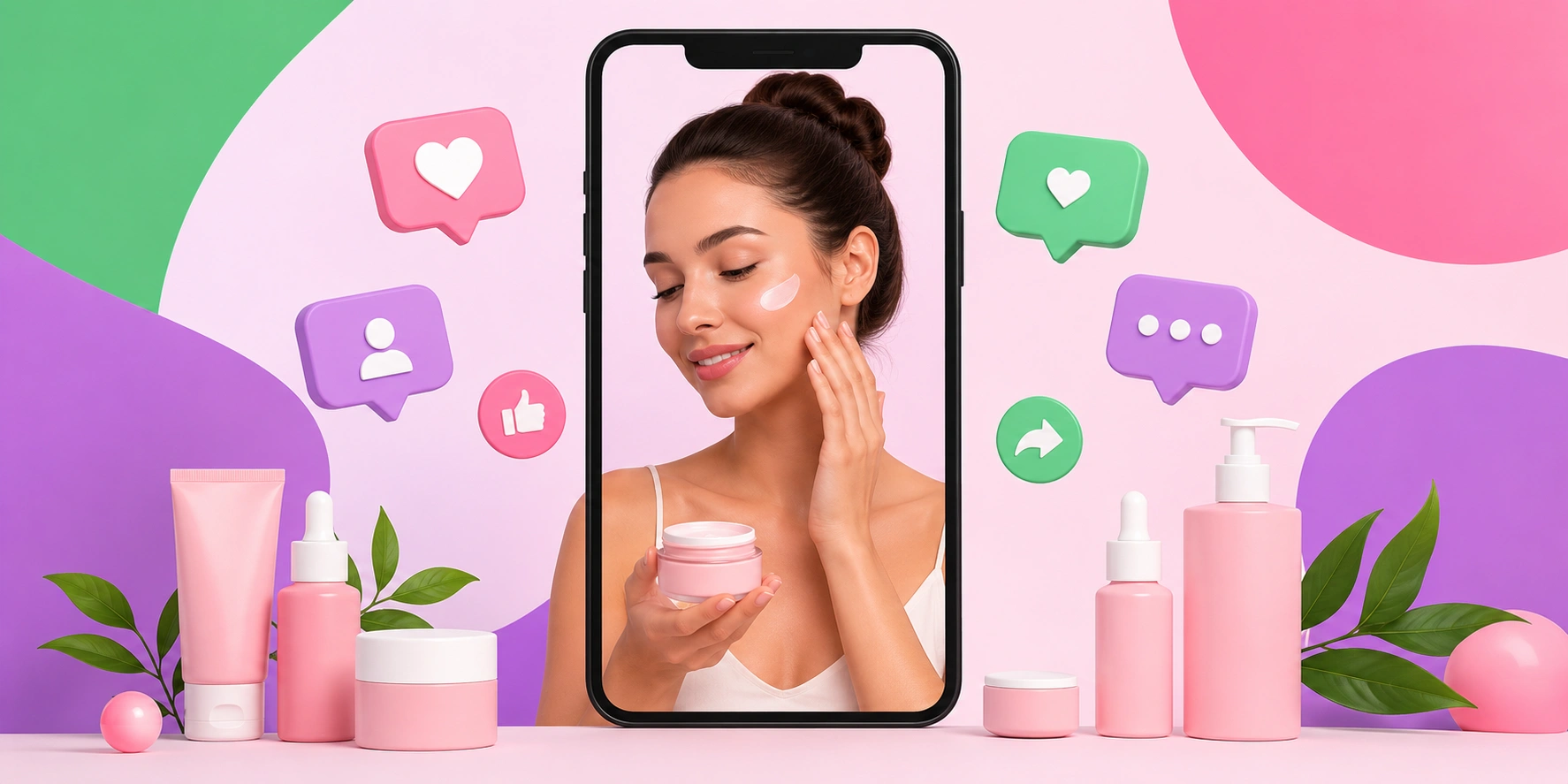
How to Promote Skin Care Products on Social Media: A Proven Playbook
Promoting skin care products on social media means using visual platforms like Instagram, TikTok, and YouTube to educate, demonstrate results, and build trust so followers convert into buyers. Skin care is a high-consideration, high-emotion category: people buy based on visible outcomes, ingredient credibility, and social proof. The brands that win are not the ones shouting discounts, but the ones that teach skin science, show real before-and-after transformations, and answer the exact questions a nervous first-time buyer is typing into search. This guide breaks down the exact content formats, posting rhythm, and compliance guardrails that turn a scroll into a sale.
Quick Answer: To promote skin care products on social media, combine educational short-form video, authentic before-and-after content, and micro-influencer reviews. Post consistently 4-7 times weekly, use ingredient-led storytelling, run targeted paid ads, and always make honest, compliant claims to build long-term customer trust.
How WebPeak Helps You Scale Skin Care Social Marketing
Executing a skin care social strategy well requires content, ad management, and creative production working together. WebPeak supports beauty and wellness brands with end-to-end social media management, from content calendars and community response to conversion-focused campaigns. Their team pairs data-backed social media marketing with scroll-stopping graphic design, helping skin care brands maintain a consistent visual identity, publish compliant product claims, and measure return on ad spend across platforms so budgets go where results actually happen.
Which Social Platforms Work Best for Skin Care Brands?
Platform choice should follow your audience and content strengths, not trends. TikTok and Instagram Reels dominate discovery because short-form video shows texture, application, and results in seconds. Instagram feed and Stories nurture existing followers, while Pinterest drives long-tail search traffic for routines and concerns like acne or hyperpigmentation. YouTube supports deep education such as full routine breakdowns and dermatologist interviews. A practical starting point: choose one primary discovery platform (usually TikTok or Reels), one nurture platform (Instagram), and one evergreen search platform (Pinterest or YouTube). Master those three before expanding, because spreading thin across six channels produces weak, inconsistent content that erodes brand credibility.
What Content Formats Actually Sell Skin Care?
Skin care buyers need proof, education, and reassurance before they trust their face to a product. The highest-converting formats follow a clear structure that Google and shoppers can both parse. Use this priority list when planning your content calendar:
- Before-and-after transformations: Document real 4-8 week results with consistent lighting and no filters to maximize credibility.
- Ingredient education: Explain what niacinamide, retinol, or hyaluronic acid does in 30-second clips so buyers understand the value.
- Routine demonstrations: Show morning and night order of application to position your product inside a complete regimen.
- User-generated content (UGC): Repost customer reviews and testimonials, which convert far better than polished brand ads.
- Myth-busting: Correct common skin care misconceptions to position your brand as an authority.
- Behind-the-scenes: Show sourcing, formulation, and testing to reinforce trust and transparency.
Lead with education and proof; save direct promotion for roughly one in every four or five posts to avoid audience fatigue.
How Do You Build a Skin Care Content Calendar That Converts?
A structured calendar keeps output consistent and balances education with promotion. The framework below maps content pillars to purpose and ideal cadence so your feed nurtures buyers through every stage of their decision.
| Content Pillar | Purpose | Recommended Weekly Frequency |
|---|---|---|
| Educational (ingredients, science) | Build authority and trust | 2-3 posts |
| Social proof (UGC, reviews) | Reduce buyer hesitation | 1-2 posts |
| Transformation (before/after) | Prove real results | 1 post |
| Promotional (offers, launches) | Drive direct sales | 1 post |
| Community (Q&A, polls) | Boost engagement and reach | 1-2 posts |
Batch-produce content weekly, schedule in advance, and keep 20% of your calendar flexible for trending sounds, reactive posts, and timely skin care conversations.
How Important Are Influencers and Paid Ads for Skin Care?
Creator marketing and paid media are the growth engines of beauty. According to a 2023 report from Influencer Marketing Hub, the industry projected the influencer marketing market to reach roughly $21.1 billion, with beauty and skin care among the most active verticals. Micro-influencers (10,000-100,000 followers) often outperform celebrities because their audiences trust their recommendations and engagement rates are higher. On the paid side, Meta reports that video ads consistently drive stronger consideration for beauty brands than static images. The original insight most brands miss: pair organic UGC with paid amplification. Take a customer testimonial that performed well organically, secure usage rights, and run it as a paid ad. This blends authenticity with reach and typically lowers cost per acquisition because the creative already has proven social proof rather than looking like a traditional advertisement.
Key Takeaways
- Master three platforms (one discovery, one nurture, one search) before expanding to avoid diluting content quality.
- Short-form video showing texture, application, and real results converts skin care shoppers faster than static images.
- Micro-influencers often deliver higher engagement and trust than celebrities in the beauty category.
- Balance your calendar so only one in four or five posts is directly promotional; lead with education and proof.
- Amplify proven organic UGC with paid budget to combine authenticity with reach and lower acquisition costs.
Frequently Asked Questions
How often should I post skin care content on social media?
Post four to seven times per week for growth-focused skin care brands. Consistency matters more than volume, so prioritize a sustainable cadence you can maintain with quality content. Use short-form video as your primary format and reserve heavily promotional posts for once or twice weekly to keep your audience engaged.
Are before-and-after photos allowed for skin care on social media?
Yes, but they must be honest and unretouched. Use consistent lighting, avoid misleading edits, and don't imply guaranteed results. Many platforms and regulators penalize deceptive beauty claims, so document genuine timelines and add context like the number of weeks used to stay compliant and trustworthy.
Do I need influencers to promote skin care successfully?
No, but they accelerate results. You can grow with strong organic content and paid ads alone. However, micro-influencer partnerships add credibility and reach quickly. Start with a few authentic creators whose audience matches your target skin concerns rather than chasing the largest follower counts.
What skin care claims should I avoid on social media?
Avoid medical or curative claims like "cures acne" or "eliminates wrinkles permanently," as these can violate advertising and cosmetic regulations. Stick to cosmetic benefit language such as "helps hydrate" or "visibly smooths." When in doubt, describe the experience and appearance rather than promising clinical outcomes.
Which platform is best for launching a new skin care product?
TikTok and Instagram Reels are best for launches because short-form video drives fast discovery and demonstrates the product in action. Pair the launch with creator seeding and a small paid budget to amplify your best-performing organic content and reach new, relevant audiences quickly.
Conclusion
The single most important decision in skin care social marketing is committing to education and proof over constant promotion. Shoppers buy when they trust your ingredients, believe your results, and see people like themselves getting outcomes. Build a consistent calendar, lead with value, and amplify your best real customer content with paid budget. Start this week by auditing your last 20 posts against the content pillars above, and reallocate toward the formats that build genuine trust. Brands that prioritize honest, helpful content will keep winning as platforms increasingly reward authenticity over hype.
Related articles
 Digital Marketing
Graphic Design and Marketing: A Practical Growth Guide
Learn a practical method for graphic design and marketing for campaign planning, content systems, conversion assets, and brand growth, with clear steps, real.
 Digital Marketing
Graphic Design Advertising: How to Build Better Campaigns
Learn a practical method for graphic design advertising for paid social, display, print, outdoor, and campaign creative, with clear steps, real trade-offs.
 Digital Marketing
Keywords for Graphic Design Website: SEO That Converts
How to choose keywords for a graphic design website that attract buyers rather than browsers, and how to map them to service, location and portfolio pages.