
How to Scrape Social Media Data: A Practical, Ethical Guide for 2026
Learn how to scrape social media data legally and ethically, which tools and APIs to use, and how to turn raw posts into actionable marketing insights.
How to Scrape Social Media Data: A Practical, Ethical Guide for 2026
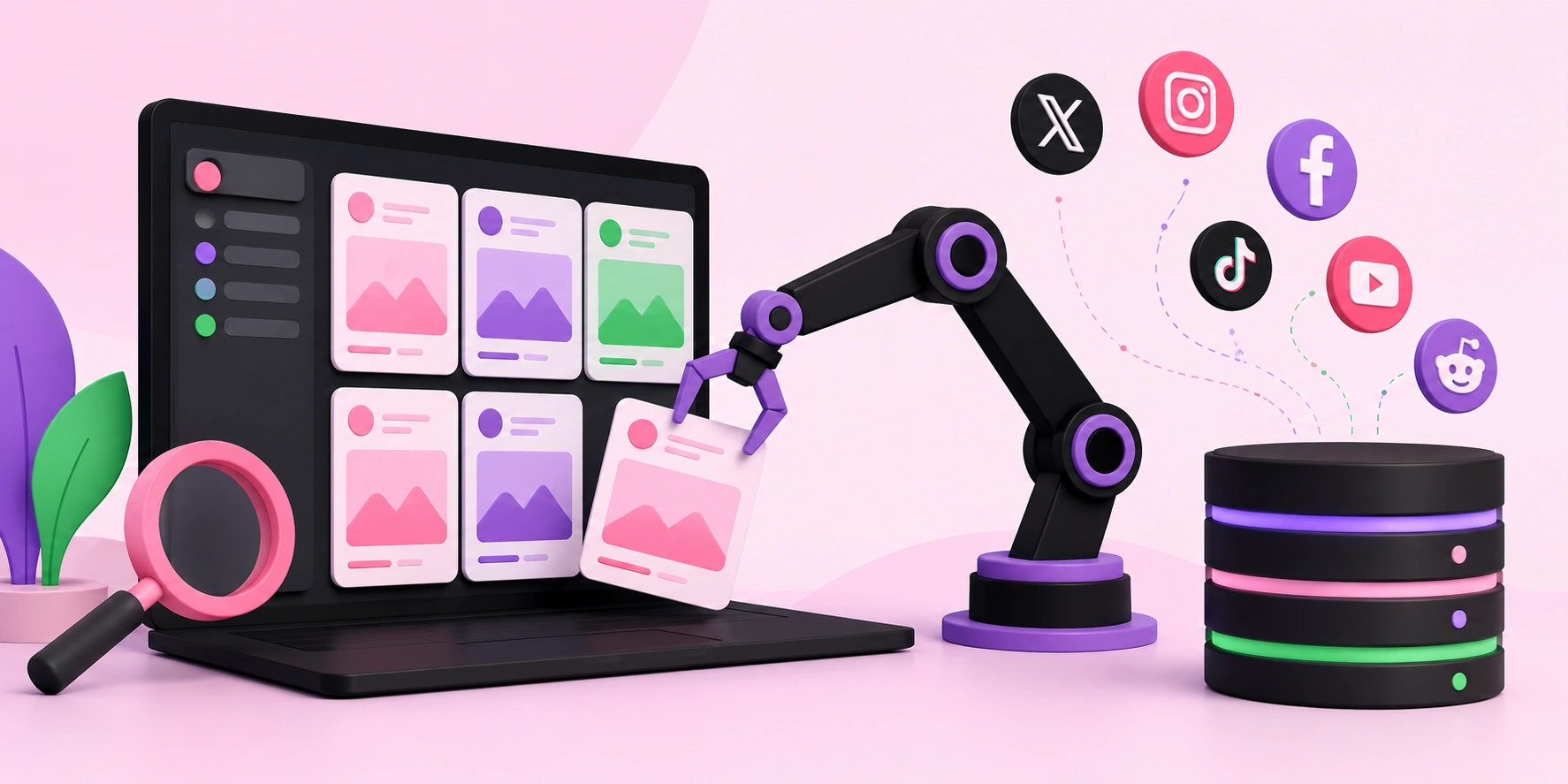
Scraping social media data is the process of programmatically collecting public information—posts, comments, hashtags, engagement counts, and profiles—from platforms like Instagram, X, TikTok, LinkedIn, and Facebook for analysis. Done correctly, it powers competitor research, sentiment analysis, trend detection, and lead generation. Done carelessly, it can violate platform terms, breach data-protection laws, or get your infrastructure blocked. This guide explains the legitimate methods, the right tools, and the compliance guardrails so you can collect data that is both useful and defensible.
Quick Answer: To scrape social media data, first use the platform's official API where available, then fall back to compliant web scraping for public data only. Respect robots.txt and terms of service, avoid personal data without consent, rotate requests responsibly, and store data securely. Prioritize official APIs to stay legal and reliable.
How WebPeak Helps You Build Compliant Data Scraping Systems
WebPeak is a worldwide full-service digital agency that builds custom data-collection and analytics tools tailored to your marketing goals. Their web application development services team engineers scrapers, API integrations, and dashboards that pull social data reliably and at scale, while their AI data analysis and visualization specialists transform raw social feeds into clear, decision-ready insights. Because compliance and reliability matter as much as speed, they design systems with rate limiting, secure storage, and legal safeguards built in—so you get actionable intelligence without the technical and regulatory risk of building it from scratch.
Is It Legal to Scrape Social Media Data?
Scraping publicly available data is generally legal, but it exists in a nuanced grey area governed by platform terms of service, copyright, and privacy law. The landmark hiQ Labs v. LinkedIn case in the United States established that scraping publicly accessible data does not automatically violate the Computer Fraud and Abuse Act. However, that ruling does not override a platform's terms of service or data-protection regulations.
Personal data—any information that can identify a living individual—is the critical dividing line. Under the EU's GDPR and California's CCPA, collecting and storing personal data without a lawful basis or consent can trigger serious penalties. The practical rule: scrape public, aggregate, non-personal data freely; treat anything that identifies individuals with extreme caution and a documented legal basis. When in doubt, consult a lawyer before collecting data at scale.
What Are the Best Methods and Tools to Scrape Social Media Data?
There is a clear hierarchy of methods, from most to least reliable and compliant. Follow this order:
- Official APIs first: Use platform APIs like the X API, Meta Graph API, TikTok Research API, or LinkedIn API. They are stable, sanctioned, and structured.
- Third-party data providers: Services like Bright Data, Apify, and Phyllo offer pre-built, compliance-focused data feeds when native APIs are limited.
- Custom web scraping: Use Python libraries such as Requests, BeautifulSoup, Scrapy, or Playwright for browser automation on public pages.
- Headless browsers: Tools like Puppeteer and Selenium handle dynamic, JavaScript-heavy content that simple HTTP requests cannot load.
Always start at the top of this list. APIs give you cleaner data with fewer legal and technical headaches, and only drop to custom scraping when the API cannot provide what you need.
How Do You Choose the Right Approach for Your Project?
Choosing between an API and custom scraping depends on data volume, budget, and how much structure you need. Each method has trade-offs in reliability, cost, and maintenance. The table below compares the main approaches so you can match the method to your use case.
| Method | Best For | Key Limitation |
|---|---|---|
| Official Platform API | Reliable, sanctioned, structured data | Rate limits and restricted fields |
| Third-Party Data Provider | Scale without building infrastructure | Ongoing subscription cost |
| Custom Web Scraper | Full control over public data | Breaks when sites change layout |
| Headless Browser Automation | Dynamic, JavaScript-rendered pages | Slower and resource-intensive |
For most marketing teams, a hybrid approach works best: use official APIs for core metrics and a data provider or targeted scraper to fill specific gaps. This balances reliability, cost, and compliance.
How Do You Turn Scraped Data Into Actionable Insights?
Raw scraped data is worthless until it is cleaned, structured, and analyzed. According to Gartner, poor data quality costs organizations an average of $12.9 million per year, which is why cleaning and validation must come before analysis. Separately, IDC has projected the global datasphere will reach 175 zettabytes, underscoring that the competitive edge lies not in collecting data but in extracting meaning from it.
In my experience building social-listening systems, the highest-value output is sentiment and trend analysis—knowing not just what people say about a brand, but whether the tone is shifting and why. Start by deduplicating and normalizing your data, then apply natural language processing to classify sentiment and detect emerging topics. Visualize the results in dashboards so non-technical stakeholders can act on them. The original insight most teams miss: scraping frequency matters as much as volume. A smaller dataset refreshed daily reveals trends far earlier than a massive dataset scraped once a quarter, and early trend detection is where the real marketing advantage lives.
Key Takeaways
- Scraping public, non-personal data is generally legal, but platform terms of service and privacy laws like GDPR and CCPA still apply.
- Always try the official API first—it is more reliable, structured, and compliant than custom scraping.
- Personal data requires a lawful basis or consent; treat identifiable information with extreme caution.
- Poor data quality costs organizations an average of $12.9 million per year, so cleaning must precede analysis.
- Refresh frequency often beats raw volume for detecting trends early and gaining a competitive edge.
Frequently Asked Questions
Can I get banned for scraping social media?
Yes, platforms can suspend accounts or block IP addresses that violate their terms of service or send aggressive request volumes. Reduce this risk by using official APIs, respecting rate limits, rotating requests responsibly, and scraping only public data. Never automate logged-in actions that mimic real users at scale.
What programming language is best for scraping social media data?
Python is the most popular choice because of mature libraries like Scrapy, BeautifulSoup, Requests, and Playwright, plus strong data-analysis tools such as pandas. It handles both simple HTTP scraping and browser automation, and integrates easily with machine learning for sentiment and trend analysis.
Do I need permission to scrape public posts?
You generally do not need explicit permission to access publicly visible posts, but you must comply with the platform's terms of service and privacy laws. Collecting personal data that identifies individuals requires a lawful basis under GDPR or CCPA. When uncertain, seek legal advice before scaling collection.
What is the difference between an API and web scraping?
An API is an official, structured channel a platform provides to access its data, with defined endpoints and permissions. Web scraping extracts data directly from rendered web pages without an official interface. APIs are more reliable and compliant; scraping offers flexibility when no suitable API exists.
How often should I scrape social media data?
Frequency depends on your goal: sentiment and trend monitoring benefits from daily or hourly refreshes, while competitor benchmarking may only need weekly snapshots. More frequent, smaller pulls detect emerging trends earlier than infrequent bulk scrapes, but always stay within platform rate limits to avoid blocks.
Conclusion
The most important decision when scraping social media data is choosing compliance and reliability over shortcuts—lead with official APIs, respect privacy law, and only scrape public data you can legally justify. Your next step is to audit which platforms offer APIs that already cover your data needs before building a custom scraper. Teams that treat data collection as a governed, engineered system rather than a quick hack consistently produce cleaner insights and avoid the legal and technical failures that derail rushed projects.
Related articles
 Web Application Development
Approach Graphic in UX Design for Better Products
A practical guide to graphic approach in UX design for product interfaces with decision criteria, common mistakes, examples, and a step-by-step workflow for.
 Web Application Development
Background Artificial Intelligence: The Silent AI Layer
Background artificial intelligence explained: the asynchronous AI work that runs outside the request cycle and why it outperforms visible chat interfaces.
 Web Application Development
Hook0 Artificial Intelligence: Webhooks for AI Workflows
How Hook0, the open-source webhook server, fits artificial intelligence workflows where model jobs finish asynchronously and delivery must be guaranteed.