
What Is Artificial Intelligence Enablement and Why Does Your Company Need It?
Discover what AI enablement means, how it transforms business operations, and why your company needs it to stay competitive in today's digital-first world.
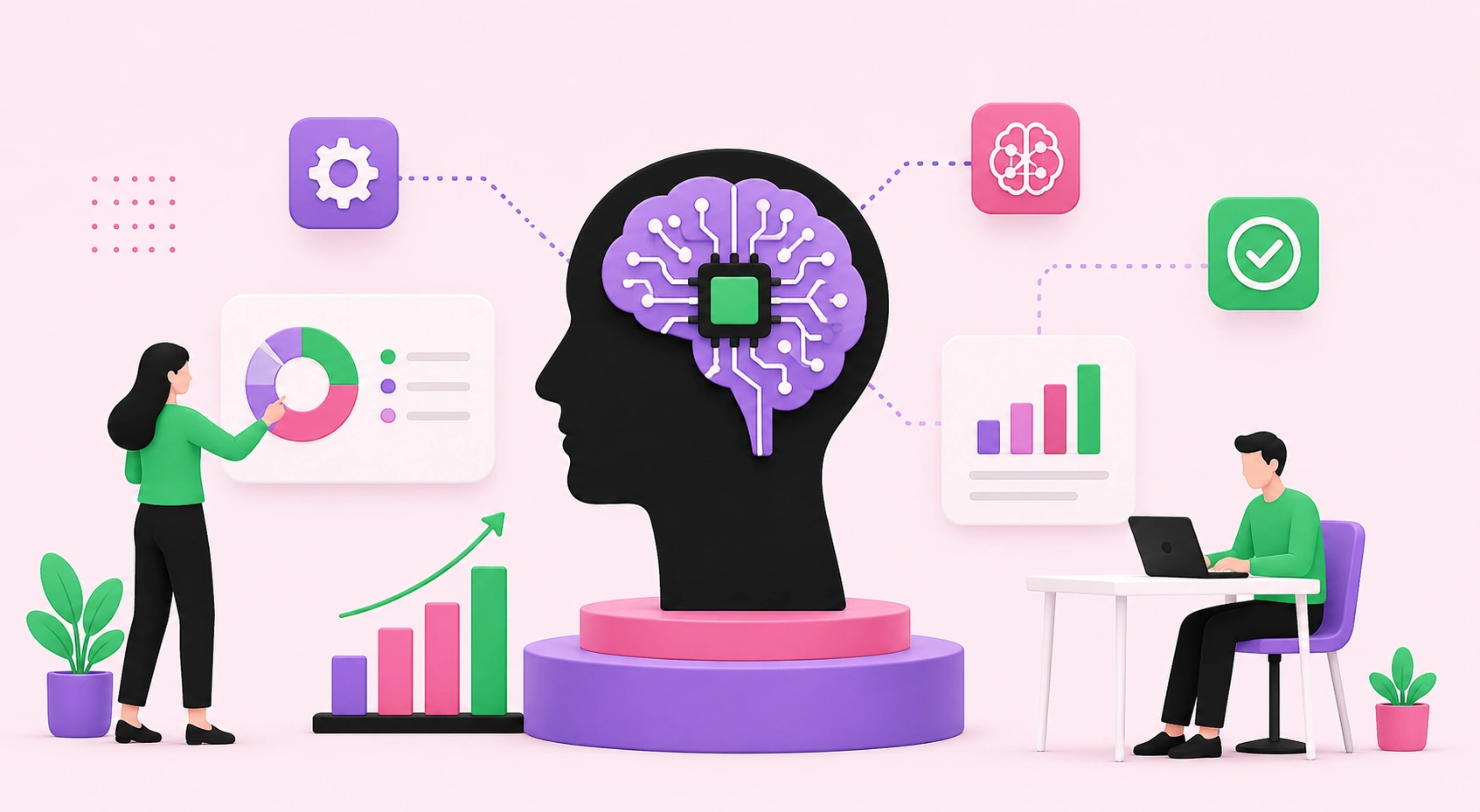
What Is Artificial Intelligence Enablement and Why Does Your Company Need It?
Artificial intelligence is no longer a concept reserved for tech giants or science fiction. It has become a practical, measurable business tool that companies across every industry are actively deploying. Yet despite the growing momentum, many organizations still struggle to extract real value from AI investments. The gap between adopting AI tools and actually benefiting from them is where AI enablement comes in.
Understanding what AI enablement truly means — and why your company needs it — can be the difference between leading your market and falling behind competitors who are moving faster and smarter.
What Is AI Enablement?
AI enablement is the strategic process of equipping your organization — its people, processes, infrastructure, and culture — to effectively adopt, integrate, and scale artificial intelligence solutions. It goes beyond simply purchasing an AI tool or hiring a data scientist. True AI enablement ensures that every layer of your business is aligned and prepared to work with AI in a way that drives measurable outcomes.
Think of it this way: buying AI software without enablement is like installing a jet engine in a car. The power is there, but the vehicle was never designed to use it. AI enablement redesigns the vehicle.
It typically encompasses four core pillars:
- People Enablement: Training employees, building AI literacy, and fostering a culture that embraces intelligent automation.
- Process Enablement: Redesigning workflows to integrate AI outputs into daily operations seamlessly.
- Technology Enablement: Building or upgrading the data infrastructure needed to feed, train, and deploy AI models effectively.
- Strategy Enablement: Aligning AI initiatives with long-term business objectives, governance frameworks, and ethical guidelines.
When all four pillars work together, AI stops being an experiment and starts becoming a competitive advantage.
Why So Many AI Projects Fail Without Enablement
Industry research consistently shows that a significant percentage of AI projects either fail outright or never scale beyond a pilot phase. The reasons are rarely technical. More often, the failures come down to organizational unpreparedness — teams that do not trust AI outputs, data systems that are siloed and inconsistent, leadership that has not defined clear use cases, and cultures that resist change.
This is precisely why enablement matters. Without a structured approach to integrating AI into your business, you risk spending significant resources on tools that generate little to no return. You may also expose your organization to compliance risks, ethical blind spots, or reputational damage if AI systems are deployed without proper oversight.
AI enablement creates the foundation that turns AI potential into AI performance.
Key Components of an Effective AI Enablement Strategy
1. Data Readiness and Infrastructure
AI runs on data. Before your organization can benefit from any AI model, you need clean, well-structured, accessible data. AI enablement involves auditing your existing data assets, closing gaps, establishing governance protocols, and building pipelines that make quality data available when and where it is needed. Without this foundation, even the most sophisticated AI models will produce unreliable results.
2. Workforce Training and AI Literacy
Your employees are not being replaced by AI — they are being empowered by it. But only if they understand how to work alongside it. AI enablement includes training programs tailored to different roles within your organization. A marketing manager does not need to understand neural networks, but they should understand how AI-generated insights can shape campaign decisions. A customer service team does not need to code, but they should know how to interpret AI-flagged customer sentiment data.
Building this layer of AI literacy across your workforce dramatically improves adoption rates and reduces resistance to change.
3. Governance and Ethical Frameworks
AI introduces new risks: bias in automated decisions, privacy concerns with data usage, regulatory compliance across jurisdictions, and accountability when things go wrong. A robust AI enablement strategy includes clear governance frameworks that define who owns AI decisions, how models are monitored, what happens when anomalies occur, and how your organization stays compliant with evolving AI regulations.
4. Use Case Identification and Prioritization
Not every business process benefits equally from AI. Effective enablement begins with identifying high-value use cases — areas where AI can deliver significant time savings, cost reductions, revenue growth, or customer experience improvements. These use cases are then prioritized based on feasibility, data availability, and strategic importance. Starting with the right problems ensures early wins that build momentum and internal confidence.
5. Continuous Evaluation and Iteration
AI is not a set-it-and-forget-it solution. Models drift as market conditions change. New data patterns emerge. Business goals evolve. AI enablement builds continuous evaluation loops into your operations so that AI performance is regularly measured, models are retrained when needed, and insights are used to improve both the AI and the processes it supports.
Industries Where AI Enablement Is Already Transforming Results
AI enablement is not industry-specific — it is business-critical across the board. Here is how different sectors are leveraging it:
Healthcare
Hospitals and clinics use AI-enabled workflows to speed up diagnostics, predict patient readmissions, optimize staffing, and reduce administrative burdens. Enablement ensures clinicians can trust and act on AI recommendations within existing care pathways.
Retail and E-commerce
From personalized product recommendations to dynamic pricing and inventory forecasting, AI-enabled retail businesses respond to customer behavior in real time. The competitive edge comes not from having the AI tool, but from being organizationally ready to act on its outputs instantly.
Financial Services
Banks and fintech companies use AI to detect fraud, assess credit risk, and personalize financial advice. Enablement in this sector is especially critical given the regulatory scrutiny and the high stakes of automated financial decisions.
Manufacturing
Predictive maintenance, quality control automation, and supply chain optimization are transforming factory floors. AI enablement here often focuses heavily on integrating AI with legacy operational technology and retraining frontline workers.
What AI Enablement Is Not
It is worth clarifying what AI enablement is not, to avoid common misconceptions.
It is not simply buying an AI subscription. Subscribing to an AI platform gives you access to a tool, not a transformation. Without the surrounding strategy, training, and infrastructure, the tool will underperform.
It is not a one-time project. AI enablement is an ongoing organizational capability, not a single implementation. As AI technology evolves and your business grows, your enablement strategy must grow with it.
It is not just for large enterprises. Small and mid-sized businesses can and should pursue AI enablement in proportion to their scale. Starting lean with focused use cases and building capabilities over time is entirely viable and often more effective than over-engineering from the start.
How to Begin Your AI Enablement Journey
If your organization is ready to move from AI curiosity to AI capability, here is a practical starting framework:
- Assess your current state: Audit your data infrastructure, AI literacy levels, and existing technology investments.
- Define your vision: Articulate what success looks like — which problems you want AI to solve and what business outcomes matter most.
- Identify quick wins: Select two or three high-impact, high-feasibility use cases to pilot first and build credibility internally.
- Invest in your people: Launch training programs and create internal AI champions who can drive adoption across departments.
- Build governance early: Establish data ownership, model monitoring responsibilities, and ethical review processes before scaling.
- Partner with experts: AI enablement accelerates dramatically when you work with experienced partners who have implemented AI strategies across diverse business environments.
If you are looking for expert guidance on where to begin, the team at WebPeak helps organizations build practical, results-driven digital strategies tailored to their specific goals and industries.
Why Your Company Cannot Afford to Wait
The competitive landscape is shifting faster than most business leaders realize. Companies that have invested in AI enablement are processing information faster, serving customers better, and operating leaner than those still relying on purely manual workflows. The longer your organization waits, the wider that gap becomes.
AI enablement is not about chasing trends. It is about building a resilient, intelligent organization that is prepared for the demands of a rapidly evolving marketplace. The companies that thrive in the next decade will not necessarily be the ones that adopted AI first — they will be the ones that adopted it most effectively.
If your business is ready to move beyond experimentation and build a genuine AI capability, explore the comprehensive AI services offered by WebPeak — from strategy and implementation to training and ongoing optimization.
Final Thoughts
AI enablement is the missing link between AI investment and AI impact. It addresses the human, organizational, and structural dimensions of AI adoption that technology alone cannot solve. By building the right foundation — quality data, an informed workforce, clear governance, and a focused strategy — your company positions itself not just to use AI, but to be genuinely transformed by it.
The question is no longer whether AI will change your industry. It already has. The question is whether your organization is enabled to lead that change or simply react to it.
Related articles
 Artificial Intelligence
Automatic Graphic Design: Where Automation Actually Works
Automatic graphic design works for execution and fails at judgement. Learn which tasks to automate, which to protect, and how to build a safe pipeline now.
 Artificial Intelligence
Best Time of Flight Artificial Intelligence Sensors Guide
Choosing the best time of flight artificial intelligence sensor setup: how ToF depth data improves models, and where it beats stereo or structured light.
 Artificial Intelligence
Audiobook Artificial Intelligence: Listen and Learn AI Fast
Which artificial intelligence audiobooks actually work in audio, which fail without diagrams, and how to retain technical material you only ever hear.